

ONLINE AGE

(Online version of the Arunachal Age newspaper)

Author name: OnlineAge

REGIONAL

Shah chairs NEC plenary in Shillong, leaders discuss North East Vision Plan 2047

SHILLONG : Union Home Minister Amit Shah on Thursday chaired the 73rd plenary session of the North Eastern Council, where leaders from the eight northeastern states resolved to work towards a stronger and more prosperous region and deliberated on the North East Vision Plan 2047. The session brought together governors, chief ministers, deputy chief ministers and senior officials from across the Northeast. “Union Home Minister Amit Shah, Union Minister for DoNER Jyotiraditya M Scindia, governors, chief ministers, deputy chief ministers, and senior officials assembled ahead of the plenary deliberations,” the NEC said in a post on X. All the leaders reaffirmed their collective commitment to the growth, connectivity and prosperity of the region, it added. Union Minister of the Development of North Eastern Region (DoNER) Scindia said all the leaders are united in their resolve to create a “stronger and more prosperous” Northeast. According to an official communique, stakeholders from all eight northeastern states discussed the North East Vision Plan 2047 and key regional development priorities. “The plenary session discussed and deliberated on progress made by the CM High-Level Task Forces constituted for critical sectors of regional development,” the DoNER Ministry said on X. The session also reviewed important initiatives of the DoNER ministry, including updates on major schemes and programmes, outcomes of the North East Investment Summit and Bankers’ Conclave, it added.   The ministry said leaders analysed youth-focused initiatives, efforts related to tourism and logistics, and the region’s unique selling proposition (USP) projects. Presentations were made on tourism, agriculture and horticulture, investment promotion, self-reliance in milk, eggs, fish and meat production, sports promotion, economic corridor development, infrastructure and connectivity, and handloom and handicrafts. “The deliberations are expected to facilitate coordinated action among states and stakeholders for achieving shared development goals,” an official said. The North East Vision Plan 2047 seeks to provide a long-term roadmap for transforming the region into a vibrant hub of economic growth, connectivity, innovation, sustainability and cultural prosperity by the centenary year of India’s independence. Earlier in the day, Meghalaya Chief Minister Conrad K Sangma welcomed Shah to Shillong for the meeting. “Glad to welcome Hon’ble Union Home Minister and Chairman of the North Eastern Council, Shri @AmitShah ji to Shillong for the 73rd NEC Plenary Session,” he said. Ahead of the main session, a pre-Plenary meeting was held, bringing together senior officials from the government of India and all eight Northeastern states on Wednesday. The meeting was attended by chief secretaries, state planning secretaries, senior officers of DoNER ministry, NEC officials and other key stakeholders. The North Eastern Council, established under the North Eastern Council Act, 1971, serves as the apex regional planning body for the Northeastern region and plays a pivotal role in fostering coordinated development and strengthening cooperative federalism in the region. It is the nodal agency for the economic and social development of the region, which consists of Arunachal Pradesh, Assam, Manipur, Meghalaya, Mizoram, Nagaland, Sikkim and Tripura. (Source: PTI)    
REGIONAL

Assam to roll out emergency mobile alert system to warn citizens about impending disasters

GUWAHATI : The Assam State Disaster Management Authority (ASDMA) on Thursday said it will implement the Cell Broadcast System (CBS), a public warning mechanism launched by the central government, across the northeastern state in the coming days. Developed by C-DOT under the Department of Telecommunications in collaboration with the National Disaster Management Authority (NDMA) and Ministry of Home Affairs, the system enables authorities to send instant, geo-targeted emergency alerts directly to all mobile phones in a specific area. The CBS has been made available for implementation across India, including Assam, and a nationwide test was conducted in May. The system has already proven effective during real disasters in several states. “However, in the states including Assam wherein, Model Code of Conduct was in force, the test was excluded. Hence now, the Government of Assam is planning to implement the activity across the state as instructed by the Government of India,” ASDMA said in a statement. The CBS involves dissemination of critical and time-sensitive messages for impending disasters to all mobile devices within a designated geographical area, irrespective of whether the recipients are residents or visitors. “During the implementation of the said CBS, the citizens may receive emergency alerts on their mobile devices pertaining to disasters. The CBS alerts are highly sensitive, which trigger a loud audio alarm/notification on mobile handsets for approximately 30 seconds whenever received,” the ASDMA said. These alerts are official messages issued only by authorised government agencies during genuine emergencies such as extreme weather conditions like storms, heavy rain, lightning, cyclones, floods, flash floods or other disasters like gas leaks, it said. The alert would appear as a pop-up message on a person’s mobile phone accompanied by a distinctive loud tone and vibration. On supported handsets, the message would also be read aloud. “The CBS system is far more reliable than traditional SMS alerts. It works even during network congestion, reaches all mobile users in the targeted area, including roaming users. It supports messages in multiple languages and is functional across 2G, 3G, 4G, and 5G networks,” the ASDMA said. Citizens are also requested to share the information with family members, especially the elderly and those living in remote areas, it added. (Source: PTI)      

Editorial

Progress, with notes of caution

India has recorded an impressive performance in public health indicators in the sixth round of the National Family Health Survey (NFHS-6), released last week. The gains are significant compared with findings from recent surveys. Increased social health spending has helped the country achieve remarkable outcomes in reproductive health and childcare. Institutional deliveries are at 90% now. Compared with the NFHS-5 findings, child stunting dropped from 35.5% to 29.3%, and severe wasting dropped from 7.7% to 5.2%. Vaccination levels for children are above 96%. The survey reflects the positive impact of Ayushman Bharat-PMJAY and other health protection initiatives. Outside the health sector, it reveals commendable progress in women’s digital inclusion and financial empowerment. While these are positive signals, some of the survey’s findings should also cause serious concern. Child nutrition is one such area: 85% of India’s children in the 6-23 months age group are not receiving an adequate diet. A decline in exclusive breastfeeding during the first six months has been reported. More than 31% of children have been found underweight. The survey also reports an increasing incidence of non-communicable diseases such as diabetes, hypertension, and obesity. One in six Indians is reportedly diabetic, and close to 30% are obese. The obesity level is about 27% for men and more than 30% for women. As most children do not receive essential nutrition, childhood obesity is a growing trend in the country. In the survey, there are pointers to a paradox related to nutrition: the coexistence of undernutrition, which leads to stunting and wasting in children, and worrying levels of obesity. The survey shows that nutritional diversity, which is critical to all segments of the population, needs to be promoted and accorded special attention in the case of children. NFHS-6 is also important for what it does not say. It entails only 101 key indicators as against 131 in NFHS-5. The survey has left out markers such as anaemia prevalence, sex ratio at birth, infant and child mortality rates, and household use of clean cooking gas. Although the reason for these omissions is not explained, some parameters are reportedly shifted to specialised surveys. The survey does not reveal an ideal picture of the country’s health, with concerns marked across sections of the population. Its findings present a case for greater momentum in public health investment and targeted programmes tailored for optimal impact. India cannot afford a growing population that is grappling with falling health. (Source: DH)  

Latest News, National, Popular News, State News

‘Insult to SC’: Cong on Khandu having ‘control’ over files amid CBI probe

NEW DELHI : The Congress on Wednesday said the BJP has decided to brazen it out in Arunachal Pradesh with Chief Minister Pema Khandu keeping control over all files that have to be part of the CBI inquiry ordered by the Supreme Court. The top court on April 6 directed the CBI to register a preliminary inquiry into allegations of preferential allotment of contracts for public work in Arunachal Pradesh to firms allegedly owned or related to the family members of Chief Minister Khandu. Congress leader Jairam Ramesh alleged that all principles and norms have been abandoned by the BJP in the case of Khandu, and that this was an “insult” to the Supreme Court. “The BJP has clearly decided to brazen it out in Arunachal Pradesh, even though the Supreme Court has ordered a CBI investigation on the decision of the chief minister there,” Ramesh said on X. “The CM continues to be PWD minister as well and therefore has control over all files that have necessarily to be part of the CBI inquiry. All principles and norms have been abandoned,” the Congress general secretary in-charge communications said. This is an “insult” to the Supreme Court, to the people of Arunachal Pradesh, and to the Constitution of India, he said. The Congress last month had questioned why Arunachal Pradesh Chief Minister Khandu has not been removed even after the Supreme Court directed the CBI to begin a probe into charges of corruption against him. Ramesh had said this amounts to “gross travesty” of the Supreme Court order itself. He had said it was on April 6, 2026, that a three-judge bench of the Supreme Court directed the CBI to commence a preliminary inquiry into allegations that the Arunachal Pradesh chief minister’s family was awarded contracts worth Rs 1,270 crore over 10 years from January 2015 to December 2025 in a direct conflict of interest. Observing that the state and its instrumentalities cannot confer benefits according to the “whims of any political or administrative functionary”, the apex court had said it was a fit case where an “independent investigation” was necessary. The bench headed by Justice Vikram Nath had said where a case concerns the integrity of public procurement and involves allegations of conflict of interest at the highest levels, an investigation must not only be fair but also must appear fair. (Source: PTI)

Latest News, Popular News, State News

GST awareness prog held

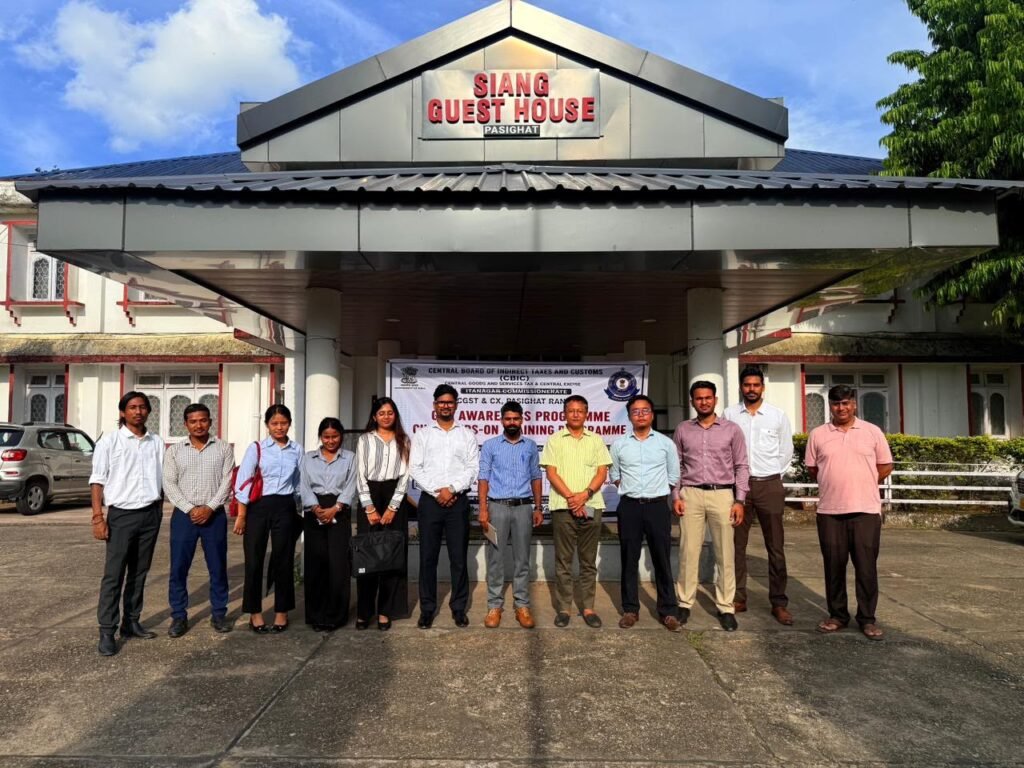
PASIGHAT :  A two-day Goods and Services Tax (GST) Awareness-cum-Hands-on Training Programme was organised by the Central Goods and Services Tax (CGST) and Central Excise Pasighat Range at Siang Guest House, Pasighat, on June 2 and 3 under the direction of the CGST Itanagar Commissionerate. The programme saw the participation of around 50 to 60 stakeholders, including taxpayers, traders, business owners, entrepreneurs, tax practitioners and members of the local business community. Participants were sensitised on key aspects of GST, including registration, return filing, invoicing, Input Tax Credit (ITC), record maintenance, GST portal functionalities, compliance requirements, and provisions relating to offences and penalties. Hands-on sessions were also conducted to provide practical exposure to the GST portal and help participants address common compliance-related issues. The technical sessions were led by Chartered Accountant Biju Sen Gupta and facilitated by officers of the CGST and Central Excise Pasighat Range in collaboration with the State Goods and Services Tax (SGST), Pasighat. Resource persons interacted extensively with participants, offering practical guidance on GST procedures, return filing, ITC claims and portal operations, while addressing queries raised by stakeholders. The programme was aimed at enhancing taxpayer awareness, encouraging voluntary compliance and strengthening engagement between the GST administration and stakeholders. Participants actively took part in discussions and appreciated the initiative for addressing practical challenges related to GST compliance. The awareness programme forms part of the department’s ongoing efforts to promote taxpayer education, improve ease of compliance and foster a transparent, efficient and taxpayer-friendly tax administration through direct interaction and capacity-building initiatives.

Latest News, Popular News, State News

Former minister Bida Taku questions ACF’s ultimatum over APFRA rules

ITANAGAR : Former minister Bida Taku on Wednesday questioned the Arunachal Christian Forum’s (ACF) decision to issue a 15-day ultimatum to the state government seeking an immediate halt to the framing and notification of the Arunachal Pradesh Freedom of Religion Act (APFRA), 1978 Rules. He alleged that the forum’s approach had created confusion among Christian believers in the state. Addressing a press conference at the Arunachal Press Club here, Taku said the process of implementing the APFRA Rules requires broader public consultation and detailed discussions among all stakeholders before any final decision is taken. He urged the state government to allow a 10-day grace period to facilitate constructive dialogue on the issue. Taku claimed that the ultimatum issued by the ACF was technically flawed, alleging that the forum had failed to adequately examine the Act and identify the specific provisions that could adversely affect the Christian community. According to him, a significant section of the Christian community in Arunachal Pradesh has been demanding the complete repeal of the APFRA, 1978. However, he alleged that the forum had shifted focus away from the core demand for repeal. He further alleged that after objections raised by the ACF, the state government replaced Indigenous Affairs Minister Mama Natung as chairman of the High-Powered Committee (HPC) and appointed retired Gauhati High Court judge Justice Brojendra Prasad Katakey to head the panel. Questioning the forum’s position, Taku asked why ACF representatives had participated in consultations on the draft rules and invited Justice Katakey for discussions if their primary demand was the outright repeal of the Act. “What does the ACF actually want?” he asked, adding that the forum should focus on identifying and addressing provisions of the Act that may adversely affect the Christian community rather than creating uncertainty among believers. Taku maintained that greater clarity, wider consultation and consensus among stakeholders are essential before any decision is taken on the implementation of the APFRA Rules.

Latest News, Popular News, State News

Changlang launches Annual Credit Plan for 2026-27

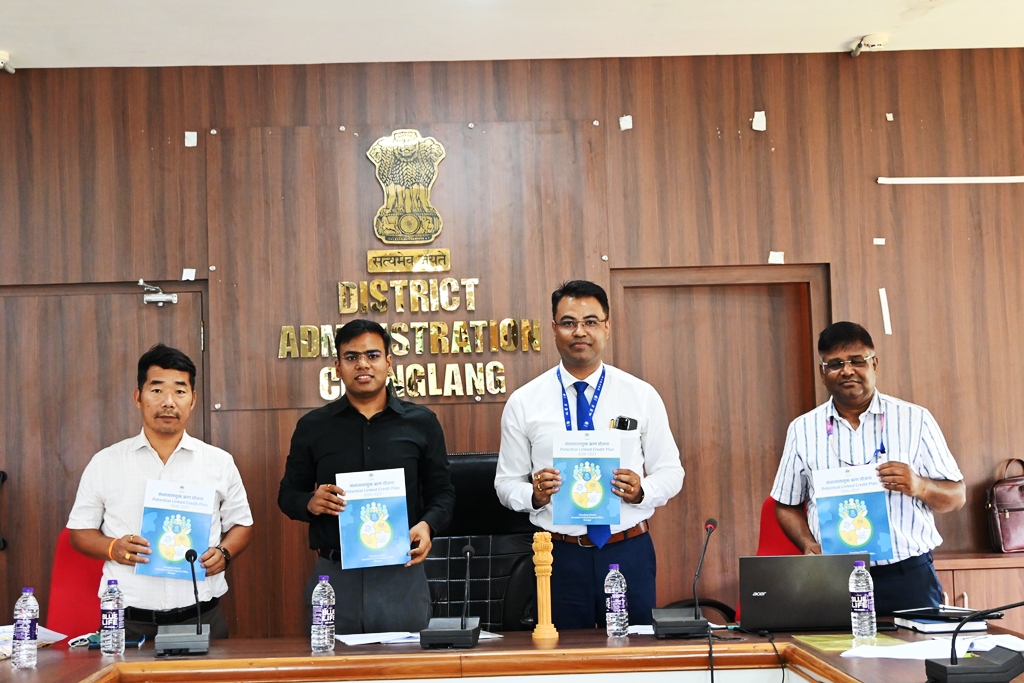
CHANGLANG : The District Consultative Committee (DCC) and District Level Review Committee (DLRC) meeting for the quarter ending March 2026 was held at the District Civil Secretariat Conference Hall here on Wednesay to review banking performance and discuss measures to strengthen credit delivery and financial inclusion in the district. The meeting was chaired by Changlang Deputy Commissioner Vishal Sah and attended by National Bank for Agriculture and Rural Development (NABARD) Assistant General Manager (District Development) Kamal Roy, Changlang Lead District Manager Binod Kumar Yadav, Reserve Bank of India Lead District Officer, branch managers of various banks, and representatives from line departments and the Arunachal State Rural Livelihoods Mission (ArSRLM). A major highlight of the meeting was the launch of the Annual Credit Plan (ACP) 2026-27 for Changlang district by the Deputy Commissioner. The ACP has been prepared based on the Potential Linked Credit Plan (PLP) 2026-27 formulated by NABARD. Addressing the meeting, Kamal Roy informed that the district’s total priority sector credit potential for 2026-27 has been estimated at ₹50.40 crore, including ₹20.42 crore earmarked for the agriculture and allied sectors. He said the PLP serves as a roadmap for ensuring adequate credit flow to priority sectors and forms the basis for preparation of the ACP. The committee reviewed key banking indicators, including the Credit-Deposit (CD) Ratio, priority sector lending, implementation of agriculture and allied sector Atma Nirbhar schemes, the Deen Dayal Upadhyaya Swavalamban Yojana (DDUSY), Pradhan Mantri MUDRA Yojana, social security schemes and the Self-Help Group (SHG)-Bank Linkage Programme. Roy also sensitised bankers and departmental officials on the significance of the PLP and stressed the need to enhance credit flow to agriculture, allied activities, micro, small and medium enterprises (MSMEs) and other priority sectors to promote inclusive economic growth. In his concluding remarks, Vishal Sah emphasised the importance of close coordination among banks and government departments to achieve developmental goals. He urged banks to improve the district’s CD Ratio, strengthen customer service, maintain bank infrastructure and ensure basic amenities for customers. The DC also called for greater focus on Central sector schemes and timely disposal of loan applications. He underscored the need for effective implementation of government-sponsored programmes, social security initiatives and state flagship schemes to improve the socio-economic condition of rural households. The meeting concluded with stakeholders reaffirming their commitment to strengthening financial inclusion, improving credit delivery and accelerating sustainable development across the district.        

Latest News, Popular News, State News

APTEA announces second phase of pen-down protest

Staff Reporter ITANAGAR :  The Arunachal Pradesh Teacher Educators’ Association (APTEA) on Wednesday announced the second phase of its pen-down protest, scheduled to be observed on June 4 and 5, intensifying its agitation over the prolonged delay in salary disbursement of District Institutes of Education and Training (DIET) employees. It also reiterated its demand for salary disbursement of DIET employees through the state head under the state budget. The association also warned of launching an indefinite hunger strike if the issue remains unresolved. Addressing a press conference at the Arunachal Press Club, APTEA spokesperson Likha Yama said employees of the 11 DIETs in the state, despite being regular state government employees, have been facing irregularities in salary disbursement since 2019. Yama informed that the problem began after the salary disbursement system for DIET employees was shifted from the state head to the Public Financial Management System (PFMS) mode, while demanding for salary disbursement of DIET employees through the state head under the state budget. “Salary is our rights, Not a Privilege” she said, adding they are in complete dilemma, whether they are State government’s cadre or central government, who have been recruited through state’s premier recruiting agency Arunachal Pradesh Public Service Commission (APPSC). She alleged that the continued delay in salary payments is not merely an administrative lapse but a violation of fundamental constitutional rights. Citing the reference of Articles 14, 21, 23, and 300A of the Constitution of India, Yama argued that withholding earned wages undermines the dignity, equality, livelihood and property rights of employees. “Delay in salaries is not just an administrative failure, it is a direct violation of constitutional guarantees provided to every citizen,” Yama said. Further, Yama informed that the association has been submitting representations to the concerned authorities since 2021, seeking the regular and timely release of salaries. However, despite repeated assurances from the government, the issue remains unresolved, she alleged. Expressing concern over the prolonged delay, the association announced a series of democratic agitations under the theme “No Pay, No Work” to press for its demand. As part of the first phase of the agitation, APTEA observed a one-day pen-down strike on May 29. Yama said the association has now decided to intensify its protest with a two-day pen-down strike on June 4 and 5, as the government failed to address the issue following the earlier protest. The association further warned that if the state government does not take concrete steps to resolve the matter, it will launch an indefinite pen-down strike or hunger strike from June 15.      

Latest News, Popular News, State News

Namsai police arrest 7 drug peddlers, seize suspected heroin

NAMSAI : Namsai Police has intensified its campaign against drug trafficking and substance abuse, leading to the arrest of seven drug peddlers and the seizure of approximately 75.86 grams of suspected heroin during a series of intelligence-based operations conducted over the past one-and-a-half months. The operations were carried out by the District Anti-Drug Squad (ADS) led by Namsai Sub-Divisional Police Officer Kengo Dirchi. The team comprised Inspector A.K. Pandey, Inspector N.K. Khen, Inspector T. Padung, Sub-Inspector R. Ado and Sub-Inspector R. Kahik. According to police, the sustained enforcement drive resulted in the registration of seven cases under the Narcotic Drugs and Psychotropic Substances (NDPS) Act and the arrest of seven alleged drug peddlers from different parts of the district. The operations were coordinated by Namsai Deputy Superintendent of Police (Headquarters) Matin Ratan under the overall supervision of Namsai Superintendent of Police Sangey Thinley. In a preventive measure aimed at curbing repeat offences, Namsai Police has also initiated action under the Prevention of Illicit Traffic in Narcotic Drugs and Psychotropic Substances (PIT NDPS) Act against habitual drug offenders to disrupt organised drug networks. Reiterating its zero-tolerance policy towards drug-related crimes, Namsai Police appealed to the public to share credible information on drug trafficking and related activities, assuring that the identity of informants would be kept strictly confidential. Police said stringent legal action would continue against all individuals involved in the illicit drug trade.      

Latest News, Popular News, REGIONAL, State News

Governor arrives at Shillong to attend NEC Plenary

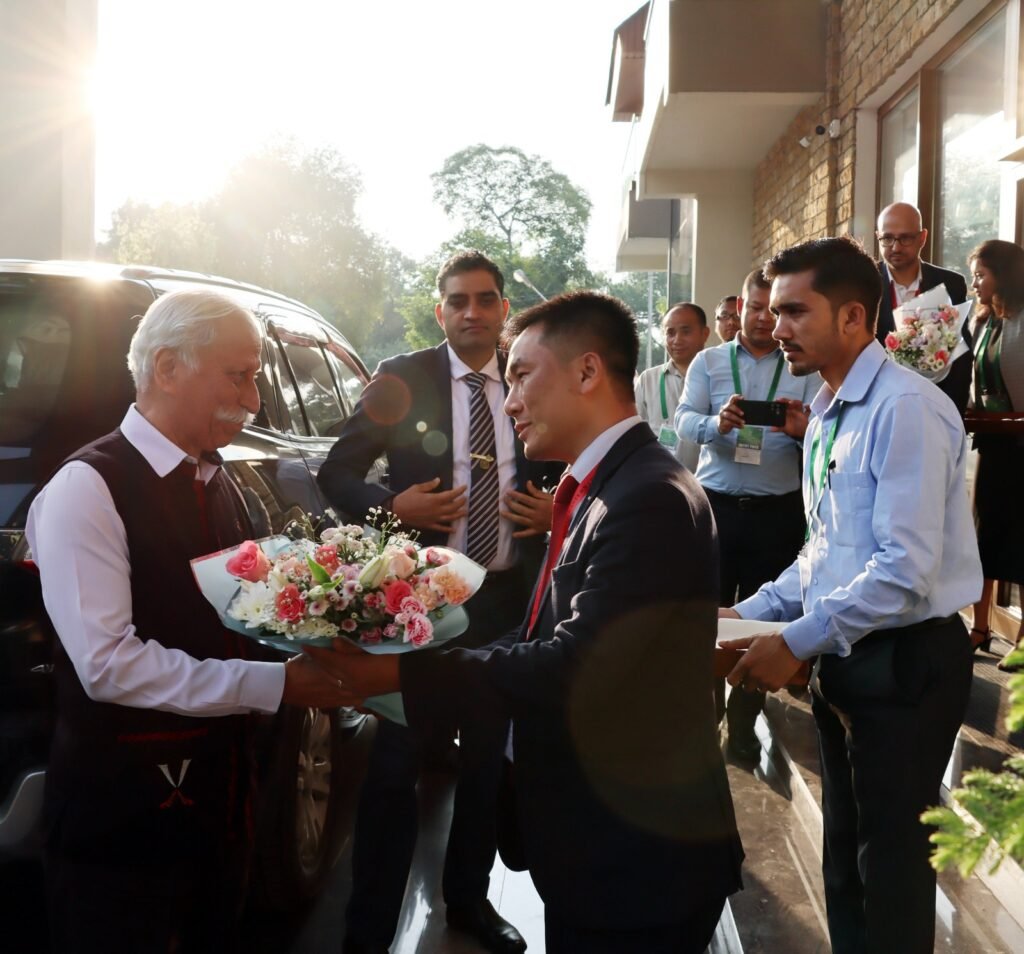
SHILLONG : Governor Lt Gen KT Parnaik (Retd.), arrived in Shillong on Wednesday to participate in the 73rd Plenary Session of the North Eastern Council (NEC). The Governor, accompanied by Commissioner to Governor, Pawan Kumar Sain, was received by officials of the NEC upon his arrival. The day-long session will be chaired by Union Home Minister and Chairman of the North Eastern Council, Amit Shah. It will also be attended by the Vice-Chairman of the NEC, Jyotiraditya Scindia, along with the Governors and Chief Ministers of the North Eastern States, Chief Secretaries, senior officials of the Government of India, and other distinguished delegates. The plenary is expected to review the progress of ongoing developmental initiatives in the region and chart a forward-looking roadmap to accelerate growth, enhance connectivity, strengthen border infrastructure, and improve the quality of life of the people of the North East in line with the vision of a developed and prosperous India.