

ONLINE AGE

(Online version of the Arunachal Age newspaper)

Author name: OnlineAge

Latest News, Popular News, State News

Airtel extends connectivity for Indian Army in Arunachal

ITANAGAR : Bharti Airtel has successfully completed the first phase of a strategic initiative undertaken in partnership with the 4 Corps of the Indian Army, headquartered at Tezpur, to strengthen mobile connectivity across remote regions of Arunachal Pradesh. With the completion of the project, Airtel has become the first telecom service provider to deliver mobile connectivity in several remote, high-altitude and difficult-to-access areas of the state, enabling military personnel and local residents to remain connected with their families and access digital services. As part of the initiative, Airtel deployed network infrastructure across 30 Army stations located in challenging mountainous terrain. The project has significantly improved voice and data connectivity in areas that have traditionally faced communication challenges due to geographical and infrastructural constraints. The deployment was carried out with extensive logistical support from the Indian Army, including assistance in fibre deployment and power infrastructure development. In locations inaccessible by road, the Army facilitated the movement of Airtel’s technical teams and telecommunication equipment through difficult terrain, ensuring successful implementation of the project. Following the successful completion of the first phase, Airtel and the Indian Army have agreed to undertake a second phase of the initiative, under which network sites will be established at 15 additional locations across Arunachal Pradesh. Speaking on the achievement, Bharti Airtel Chief Executive Officer (North East and Assam) Balaji R said the initiative reflects the company’s commitment to expanding connectivity in some of the country’s most challenging terrains. “The rollout required extensive coordination between Airtel teams and local support units to overcome significant terrain and weather-related challenges. Our teams worked under demanding high-altitude conditions and adverse weather to ensure timely and secure network activation. We are deeply grateful to the Indian Army for its unparalleled logistical support, which made it possible to bring digital connectivity to these frontier regions,” he said. The initiative forms part of Airtel’s broader efforts to bridge the digital divide and support digital transformation by expanding connectivity to underserved and strategically important regions of the country.    

Latest News, Popular News, State News

AAA conducts Voice of Adi mega audition, selects 20 contestants

Mingkeng Osik PASIGHAT : The Voice of Adi Mega Audition, organised by the Adi Artists Association (AAA), was successfully held at Paddy Retreat in Pasighat, attracting enthusiastic participation from aspiring singers from across the region. A total of 35 contestants appeared before a panel of judges, of whom 20 were selected for the next stage of the competition. The selected contestants are Tonggu Ayom, Vijay Taying, Aido Moyong, Ani Yommin, Ogul Langkam, Bhagyawan Morang, Agung Boli, Nyonyok Talom, David Gao, Mipo Tali, Katu Moyong, Rokom Tasing, Osunam Perme, Orik Yommin, Martina Yao, Ome Borang, Michell Jomang, Karma Rinya, Ijing Ratan and Talat Yosung. The judging panel comprised Tajing Gao, the first Adi to obtain a Master’s degree in Performing Arts; noted singer and lyricist Tanya Padung, organiser of Voice of East Siang and recipient of an All India Radio singing award in 1980; and senior lyricist and composer Nakeng Perme, known for several popular Adi songs, including the hit Sai Sai Sina. Speaking on the occasion, AAA General Secretary-cum-Organising Chairman John Gao said the competition aims to discover, nurture and promote talented singers from the Adi community. He encouraged participants who were not selected to continue honing their skills and return with greater confidence in future editions. He informed that five contestants would be eliminated in each round until the finalists are determined, adding that the initiative is part of the association’s effort to identify hidden musical talent and provide a platform for emerging artists. The event witnessed several impressive performances, reflecting the rich musical potential of the younger generation. Organisers expressed confidence that the competition would contribute significantly to the promotion of Adi music while creating opportunities for talented artists to gain recognition and grow in their musical careers.      

Latest News, Popular News, State News

Lower Subansiri launches 10-day ‘Nasha Mukt Bharat’ campaign

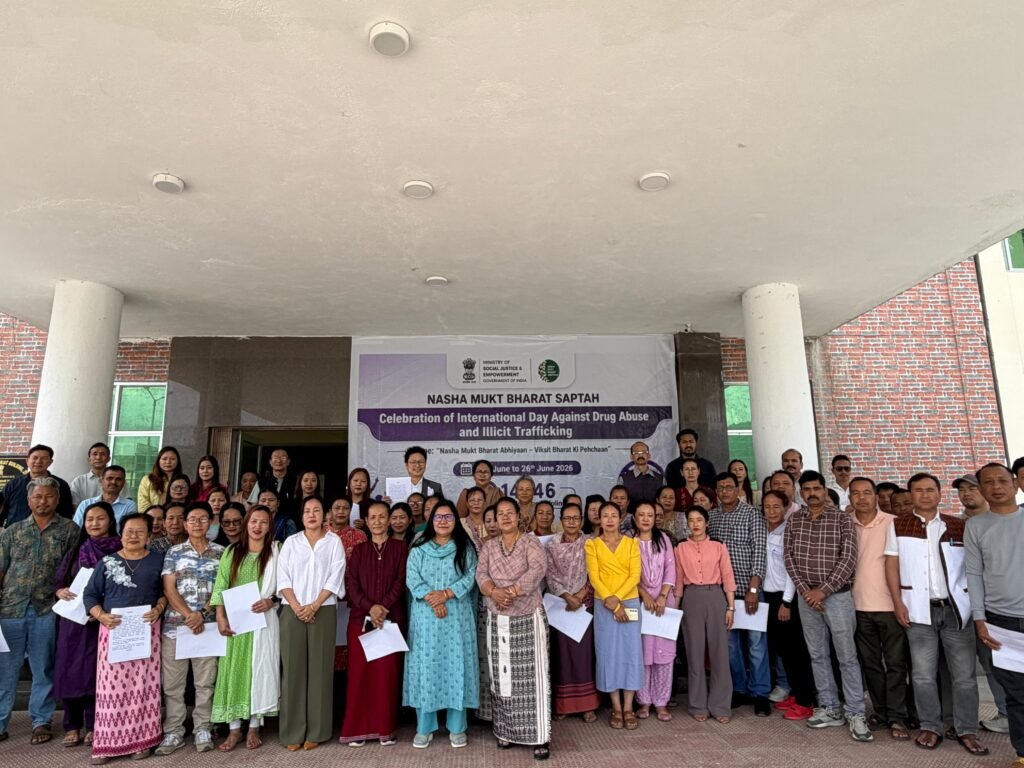
ZIRO : The Lower Subansiri district administration has launched a 10-day awareness campaign under the banner “Nasha Mukt Bharat Abhiyaan, Vikshit Bharat ki Pehchaan” as part of efforts to combat substance abuse and promote a drug-free society. The district-wide campaign, which will continue until June 26, coincides with activities being observed across the country in connection with the International Day Against Drug Abuse and Illicit Trafficking. The campaign was formally launched with a mass pledge and signature drive at the District Secretariat Office Complex in Ziro. Lower Subansiri Deputy Commissioner Oli Perme called upon Heads of Departments and local administrative leaders to actively support the initiative, underscoring the importance of a united approach in tackling drug abuse. Emphasising the need to safeguard the younger generation, the district administration highlighted that protecting youth from the dangers of substance abuse is vital for building a healthy, safe and progressive society. Community members, families and student organisations have been urged to actively participate in the campaign and help spread awareness at the grassroots level. A district action plan has been prepared by Integrated Child Development Services (ICDS) Deputy Director Kago Maya Gyati to take the anti-drug message to schools, colleges and public institutions through a series of awareness programmes and community outreach activities. As part of the schedule, awareness drives, pledge ceremonies, signature campaigns and educational film screenings will be conducted in schools from June 18 to 19. On June 20, a special programme will be organised at the Superintendent of Police Office in Ziro, followed by a mass pledge and yoga session at the DY Complex on June 21. Further activities include awareness programmes for departmental employees, a district-level essay competition for students, educational film screenings and an interactive session with college students on substance abuse and its social consequences. The campaign will conclude on June 26 at the One Stop Centre (OSC), Ziro, with a final mass pledge and signature campaign led by the Women and Child Development Department. Officials expressed confidence that the initiative would strengthen community awareness, encourage youth participation and reinforce collective efforts towards making Lower Subansiri a drug-free district. (DIPR)      

Latest News, National, Popular News, State News

Strike at paper leak mafia, not students: Rahul Gandhi slams Telegram ‘ban’

NEW DELHI : Congress leader Rahul Gandhi on Wednesday took a swipe at the government after it temporarily restricted access to Telegram, saying the “new trick” was akin to putting a lock on the victim’s house instead of catching the thief. Instant messaging app Telegram has stopped working for existing users in India after the government temporarily restricted access to the app, but it continues to remain operational through the Virtual Protocol Network (VPN). Google delisted the app on Tuesday, and Apple’s Appstore has also removed it now in compliance with the government order to block access to the app, ahead of the Neet-UG 2026 re-examination. In a post in Hindi on X, Gandh said, “‘Telegram Ban’ — Modi government’s new trick to stop paper leaks. Meaning, instead of catching the thief, just put a lock on the victim’s door.” “Lakhs of students have been studying on Telegram for years — notes, test series, discussions, preparation. How does snatching that facility become the solution to paper leaks? And it’s not even foolproof – every student in the country knows this, and so does the paper leak mafia. So, who will the next ban be on? WhatsApp?” Gandhi said. “On exam day, students will be frisked. Pockets will be cut open with scissors. Question papers will be sent via the Air Force. There won’t be any shortage of theatrics. But not a single strike at the root of the disease — because the paper leak mafia is thriving under this very government’s watch, and making the youth weep tears of blood. Modi Ji — drop the theatrics. Strike at the mafia, not the students,” Gandhi said. Listen to the ‘Echo of Students’ — – or else the youth of the country knows how to claim their rights, Gandhi said. The government on Tuesday temporarily restricted access to the Telegram messaging app ahead of the Neet-UG 2026 re-examination, with the National Testing Agency (NTA) saying the measure is aimed at tackling cheating rackets and misinformation. NTA Director General Abhishek Singh said the restriction on Telegram till June 22 is part of efforts to ensure that the June 21 re-test is conducted without malpractice. “We will not let anything go wrong. We will take all possible actions to ensure that the examination is conducted without any malpractice,” Singh had told PTI, when asked about the move. Telegram CEO Pavel Durov criticised the restriction on the messaging app in India, saying, “Banning it, even temporarily, is a mistake.” In a post on X, Durov said, “India’s IT ministry banned Telegram for one week because some users shared leaked exam questions. This punishes 150M+ ordinary Telegram users in India — not the insiders who leaked the exam materials. And the ban hasn’t stopped anything. The leaks just moved to other apps. (Source: PTI)    

Latest News, National, Popular News, State News

Joint committee seeks views of NHRC on bills for removing PM, CMs detained on serious charges

NEW DELHI : A joint committee of Parliament examining a key bill on automatic removal of the prime minister, chief ministers and ministers detained in custody for 30 consecutive days on serious criminal charges on Wednesday held consultations with the NHRC and other stakeholders here. The local study visit focused heavily on evaluating the civil liberties and administrative implications of the proposed laws. The committee’s meeting with the National Human Rights Commission served as the anchor of the day’s deliberations. The panel, which has been boycotted by the opposition, also met Delhi Chief Minister Rekha Gupta. The Constitution (130th Amendment) Bill, 2025, The Jammu & Kashmir Reorganisation (Amendment) Bill, 2025 and The Government of Union Territories (Amendment) Bill, 2025 were referred to the joint committee of Parliament for threadbare consultations. The Indraprastha (GGSIP) University offered academic and constitutional viewpoints on the legislative drafts. The JPC is expected to compile these diverse inputs from administrative leaders, human rights defenders, academics, and legal activists as it prepares its final report for Parliament. The opposition has described the bills as a tool to target states not ruled by the NDA. (Source: PTI)        

REGIONAL

Assam CM reviews measures for NEET re-exam on Jun 21

GUWAHATI : Assam Chief Minister Himanta Biswa Sarma on Wednesday reviewed preparations for the rescheduled medical entrance exam NEET-UG, to be held on June 21, and directed officials to ensure a free, fair and secure conduct of the test. Chairing a meeting, Sarma said stringent measures have been put in place to prevent any irregularities during the examination process. “Assam has always taken strict measures to ensure there are no loopholes in the entire process,” the chief minister said in a social media post after the meeting. He said military officials would transport question papers to examination centres, while CCTV surveillance would be installed at all venues. The centres will also be provided with round-the-clock police protection. As part of the security arrangements, prohibitory orders under Section 144 will be enforced within a 100-metre radius of examination centres. Candidates will undergo double-layer frisking, and mobile signal jammers will be installed at all venues. The review meeting was held via video conference with District Commissioners, Senior Superintendents of Police (SSPs) and other senior district officials. The chief minister directed the District Commissioners and SSPs to jointly inspect all examination centres to assess security arrangements, infrastructure preparedness and examination-day logistics. He also instructed that a mandatory technical audit and dry run of CCTV systems, biometric devices and signal jammers be carried out at all centres well before the examination. Adequate publicity should be undertaken to create public awareness of the restrictions, and ensure that no person other than candidates approach the examination centres, Sarma said. Sarma also said that there should be adequate deployment of women police personnel at all examination centres. The CM stressed the importance of strict adherence to National Testing Agency (NTA) guidelines regarding candidate frisking. He said that double-layer frisking should be conducted firmly, professionally and courteously, ensuring candidates do not face inconvenience or discomfort while maintaining the highest vigilance against malpractice. Sarma also directed that a nodal officer be designated in each district for CCTV monitoring, and that random checks of its footage be carried out regularly. Regarding the security of question papers, he instructed that access to bank lockers where these are stored be strictly regulated. Visits by individuals should be permitted only under exceptional circumstances and with the prior approval of the district magistrate, he said. A senior police officer not below the rank of DSP will also be designated in each district to oversee the security and monitoring of such lockers. A control room will be established in the office of the Director of Medical Education, which will become operational from June 19, he said. The examination will be conducted across 87 centres located in 17 districts of the state. Sarma said candidates carrying valid admit cards would be allowed to travel free of cost on Assam State Transport buses on the examination day. “In today’s meeting, we have taken several measures to uphold the integrity of the NEET re-examination. There will be no compromise with the future of our students,” he asserted. A total of 43,319 candidates in the state have registered for the examination. The NEET-UG examination, conducted by the National Testing Agency (NTA) for admission into MBBS courses, was held on May 3 but was subsequently cancelled following allegations of irregularities. The nationwide re-examination is scheduled for June 21. (Source: PTI)    

REGIONAL

Elusive Mishmi Takin caught on camera in North Sikkim for first time

GANGTOK : The first-ever video footage of a herd of the elusive Mishmi Takin have been recorded in the Tingda Reserve Forest of North Sikkim, marking one of the most significant confirmed sightings of the vulnerable species in the state in over two decades. According to a statement issued by the Forest and Environment Department on Wednesday, the rare sighting was made during a routine patrol in the Bakuchen area of the reserve forest, where officials documented a herd of eight Mishmi Takins (Budorcas taxicolor). “The footage documents a herd of eight individuals, representing the largest group of Takins ever recorded from this locality,” the department said. Often described as a “goat-antelope”, the Mishmi Takin is a large high-altitude ungulate native to the eastern Himalayas. The species is listed as Vulnerable on the International Union for Conservation of Nature (IUCN) Red List and is regarded as an important indicator of the health of alpine ecosystems. Known for their stocky build, shaggy coats and ability to survive in harsh mountain environments, Takins inhabit rugged terrain ranging from forested valleys to alpine meadows at elevations of up to 4,500 metres. Their skin secretes a natural oily substance that helps protect them from rain and extreme weather conditions. The department noted that Sikkim forms the westernmost edge of the Mishmi Takin’s global distribution range, making the latest documentation particularly significant for wildlife researchers and conservationists. “Historical records of the species in Sikkim are extremely limited. The present documentation therefore represents one of the most significant confirmed records of the Mishmi Takin in Sikkim in over two decades,” the statement said. Wildlife experts believe the presence of a healthy herd reflects the ecological integrity of the region’s mountain habitats and highlights the importance of preserving habitat connectivity across the Eastern Himalayas. Such transboundary ecological corridors are vital for the movement, genetic diversity and long-term survival of wide-ranging species, they said. The Forest and Environment Department attributed the sighting to sustained conservation efforts and habitat protection measures undertaken across the state’s fragile mountain ecosystems. “This remarkable sighting underscores the success of the department’s sustained conservation initiatives in protecting Sikkim’s mountain landscapes through integrated habitat management and protection,” the statement added. Officials said the footage is expected to provide valuable insights into the species’ distribution and population status in Sikkim. (Source: PTI)    

REGIONAL

100 per cent distribution of enumeration forms (EFs) in Sikkim: CEO

GANGTOK : Sikkim has achieved 100 per cent distribution of enumeration forms (EF) to eligible voters during the ongoing Special Intensive Revision (SIR) of electoral rolls, Chief Electoral Officer (CEO) Raj Singh Yadav said on Wednesday. “We have achieved 100 per cent distribution of EFs in Sikkim, way ahead of the deadline,” he told reporters here. Yadav urged all eligible voters to make timely submission of filled EFs for the preparation of the draft electoral roll in Sikkim. Yadav, however, said that distribution alone does not guarantee inclusion in the draft electoral roll as the electors who have received the forms must ensure that they are duly filled and submitted to their respective Booth Level Officers (BLOs) on or before June 28, the prescribed deadline for submission. He said that electors who fail to submit their forms by the deadline would not be included in the draft electoral roll, as no submissions would be entertained thereafter. The CEO said that once forms are submitted, BLOs will record their receipt through the BLO App, following which the forms will be digitised and processed. He urged all electors to cooperate with the election machinery and complete the process within the prescribed timeline. Referring to grievances received regarding BLOs not visiting certain voters, Yadav clarified that BLOs can visit only within their designated polling areas and voter addresses. He said that in cases where a voter’s present residence differs from the address recorded in the electoral roll, it becomes the responsibility of the elector to contact the concerned BLO and submit the form in the constituency where he or she is registered. Addressing the issue of floating population, the CEO reiterated that voters must coordinate with their respective BLOs in their registered constituencies to obtain and submit the forms. While distribution has reached full completion, Yadav expressed concern over the pace of digitisation, which remains below expectations in several areas. The district-wise digitisation progress currently stands at 48 per cent in Mangan, 38 per cent in Gangtok, 37 per cent in Namchi, 35 per cent in Gyalshing, 34 per cent in Soreng and 31 per cent in Pakyong, the lowest among all districts. PTI              

Editorial

India cannot delay AI sovereignty

Earlier this year, Anthropic – one of Silicon Valley’s most consequential artificial intelligence companies – chose Bengaluru as its second Asia-Pacific headquarters, signalling India’s arrival as a serious AI destination. The company also outlined plans to support education, agriculture, and other public-interest applications, reflecting its ambition to use AI beyond purely commercial purposes. Now, Washington has intervened with a wake-up call that India’s IT establishment cannot afford to ignore. Citing national security concerns, the United States has restricted access to Anthropic’s newest and most powerful AI models for foreign users, amid fears that vulnerabilities could be exploited in sophisticated cyberattacks. Unlike earlier export controls aimed at semiconductor hardware, this marks one of the first instances where an AI model itself has been treated as a strategic asset. Anthropic is one of the world’s leading developers of large language models alongside OpenAI and Google. Its flagship Claude models power advanced conversational and coding tools that businesses increasingly rely upon for research, software development, and automation. The implications extend well beyond one company. For Bengaluru, India’s largest technology ecosystem, which houses over 40 per cent of the country’s Global Capability Centres (GCCs), the restrictions highlight the risks of building products and services on foreign-controlled AI infrastructure. Hundreds of start-ups that were integrating these frontier models into their products and workflows now face uncertainty and may have to rewrite development roadmaps, migrate to alternative platforms or rely on less capable versions. While the disruption may be temporary, it serves as a reminder that geopolitical decisions can instantly alter access to critical digital tools and shatter the myth that the world’s most advanced AI models will always remain available. Globally, the move may accelerate a trend towards countries seeking greater technological self-reliance instead of depending entirely on overseas AI platforms. India, too, must confront an uncomfortable truth. For years, the country’s largest technology companies have generated extraordinary revenues servicing Western AI systems rather than building their own. The resources, the engineering talent – much of it concentrated in Bengaluru – and the market need have existed. What has been conspicuously absent is the strategic will to invest in sovereign AI capability. The Anthropic episode should serve as a warning bell that access to frontier AI can no longer be assumed to be permanent or universal. For Bengaluru and India, the challenge now is to move beyond being service providers to the world and become creators and owners of the technologies that will define the next era. (Source: DH)

Latest News, Popular News, State News

Arunachal cabinet approves MSME ordinance, Rs 2,000-cr rural roads plan

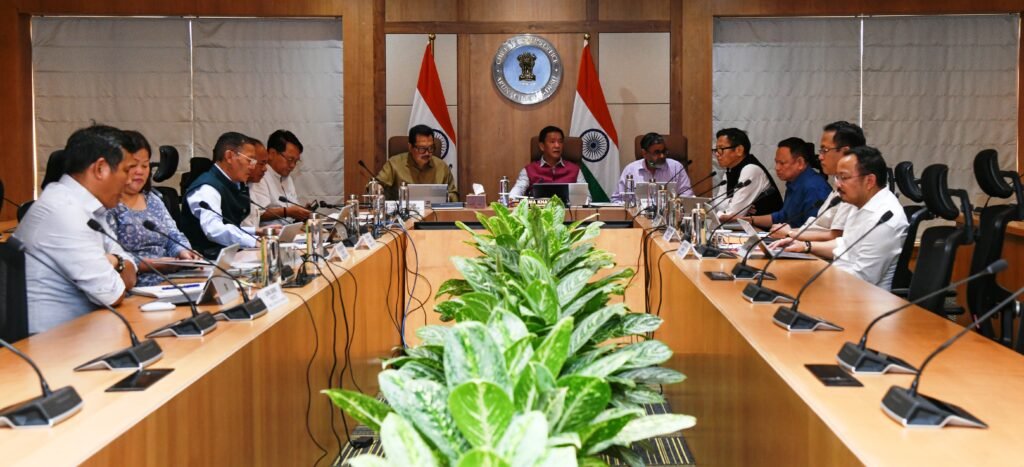
ITANAGAR : The Arunachal Pradesh cabinet on Tuesday approved a slew of proposals, including promulgation of an MSME ordinance, a Rs 2,000-crore rural road connectivity programme, simplification of land-use conversion rules, and a one-year age relaxation for eligible APPSC aspirants. The proposed Arunachal Pradesh Micro, Small and Medium Enterprises (Facilitation of Establishment and Operation) Ordinance, 2026, which will be placed before the assembly, seeks to reduce regulatory burden by allowing eligible enterprises to start operations through a self-declaration mechanism, subject to existing laws. The move would improve ease-of-doing business, encourage entrepreneurship, attract investment and generate employment, a statement from the Chief Minister’s Office said. The cabinet chaired by Chief Minister Pema Khandu also reviewed the progress of the flagship ‘Shikshit Bharat to Shikshit Arunachal’ Mission. It observed that Rs 3,612.50 crore has been invested during phase-I (2023-26) to improve school infrastructure, teacher deployment, digital education and learning outcomes, with another Rs 1,500 crore proposed for phase-II, taking the total outlay beyond Rs 5,100 crore by 2029, the release said. The mission has rationalised the school network from 2,890 to 1,885 schools through 538 host schools, enabled over 2,600 merit-based teacher transfers through a digital registry portal, and improved CBSE Class X and XII pass percentages by 21.7 per cent and 22.8 per cent, respectively, officials said. Infrastructure development under the mission includes 50 golden jubilee schools, 90 PM Shri schools, over 120 hostels, 152 science laboratories, 159 libraries, more than 400 sanitation facilities, 300 PM Poshan kitchens and 180 staff quarters, they said. The government has also recruited 150 “special education teachers” and distributed 75,100 textbooks in 10 tribal languages, the officials said. The cabinet was also apprised of the implementation framework for the Chief Minister’s Comprehensive State Rural Road Development Programme (CM-CSRRDP), under which 1,129 unconnected habitations with populations below 250 will be linked by all-weather roads by 2029. The programme will cover around 6,567 km through phased investments of Rs 2,000 crore over the next three financial years, the statement said. To facilitate planned urban growth, the cabinet approved amendments to the Arunachal Pradesh Land Settlement and Records Rules, 2012. Agricultural land within notified master plan areas will automatically be deemed converted to the prescribed land use without requiring separate permissions, while the record of rights format will be modernised for digital integration and transparency, it said. Besides, the cabinet approved the Arunachal Pradesh Cooperation Policy, 2026, aligned with the National Cooperation Policy, to strengthen cooperative institutions, improve digital governance and enhance market access for agriculture and allied sectors. In a relief for job aspirants, it granted a further one-year extension of the one-time upper age relaxation for candidates who had applied for the Arunachal Pradesh Public Service Commission (APPSC) recruitment examinations advertised in 2022, but became ineligible due to delays in conducting the tests. The cabinet also approved amendments to the Arunachal Pradesh Staff Selection Board (APSSB) Rules, 2018, allowing serving or retired organised service officers “with at least 20 years of regular service and super time scale (level-14) status” to be appointed as chairman. Retired officers, if appointed, will serve for five years or until attaining 65 years of age, whichever is earlier. It also approved relaxation of recruitment rules for regularisation of contractual services of erstwhile RMSA-trained graduate teachers against 74 existing vacancies through a departmental promotion committee. Among governance reforms, the cabinet extended the tenure of the Arunachal Pradesh Administrative Reforms Commission by six months till February 27, 2027, included divisional commissioners as ex-officio members, upgraded the member secretary post and approved amendments to recruitment rules for the post of junior analyst. It also approved changes in recruitment rules for the posts of aviation officer and various horticulture department posts, besides creating the Aalo west division of the Public Works Department without additional financial burden. The cabinet further approved amendments to state labour laws and rules to align them with the Occupational Safety, Health and Working Conditions Code, 2020, and reiterated its commitment to economic growth, better governance, employment generation, rural connectivity and improved public service delivery across the state. (Source: PTI)