

ONLINE AGE

(Online version of the Arunachal Age newspaper)

Author name: OnlineAge

Latest News, Popular News, State News

Mega Health Mela benefits hundreds at APSTS Golden Jubilee celebration

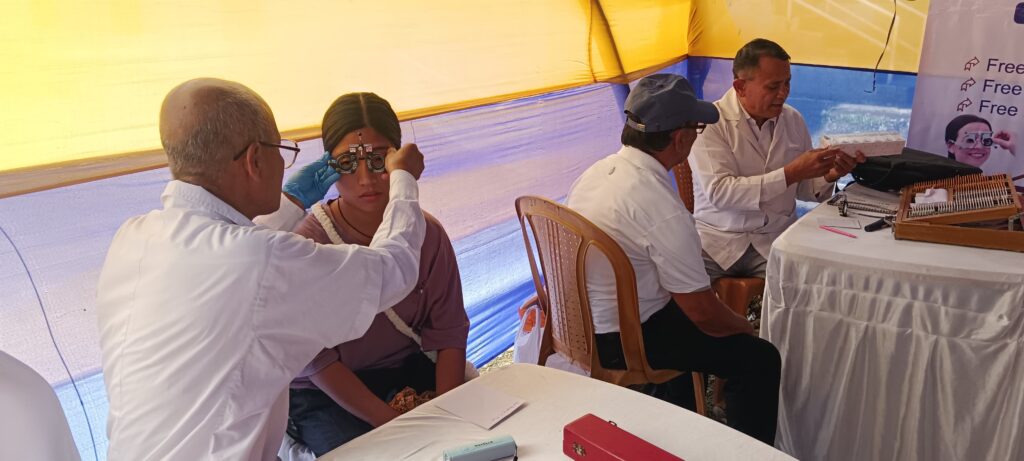
KHONSA : A Mega Health Mela-cum-Free Eye Screening Camp was organised at Nehru Stadium, Khonsa, on Saturday as part of the Golden Jubilee celebrations marking 50 years of Arunachal Pradesh State Transport Services (APSTS). Organised by the Health Department under the aegis of the District Health Society (DHS), Tirap, the programme aimed to provide comprehensive healthcare services and promote preventive health awareness among the public. The camp was conducted under the supervision of Tirap District Medical Officer (DMO) Dr B Ratan. Khonsa MLA-cum-Advisor to the Transport Minister Chakat Aboh, Tirap Zilla Parishad Chairperson Adv John K K Matey and Tirap Deputy Commissioner Techu Aran visited the camp and appreciated the Health Department’s efforts in extending essential healthcare services to the people. The Free Eye Screening Camp emerged as a major attraction, with 310 individuals undergoing eye examinations. The screening detected 210 cases of refractive errors, 35 cataract cases, 25 cases of allergic conjunctivitis, 12 cases of blepharitis and seven cases of pterygium, while 21 individuals were found to have normal vision. A total of 170 beneficiaries were provided spectacles free of cost. Under the TB Mukt Bharat Abhiyan 100-Day Campaign, Tirap District Tuberculosis Officer-cum-District Tuberculosis Centre Officer and District AIDS Control Officer Dr Jayanty Thingnok reported that 48 individuals were screened for tuberculosis, while 45 underwent handheld chest X-ray examinations. Screening for non-communicable diseases (NCDs) was conducted by the team led by Tirap District Programme Officer-cum-District Surveillance Officer Dr K Socia. Of the 163 individuals screened, 40 were found to be hypertensive and 17 diagnosed with diabetes mellitus. Free medicines were also distributed to beneficiaries. AYUSH services were provided by Dr F Aran and Dr Runcha Thinra, who conducted consultations and health check-ups for 26 individuals. General health examinations were carried out by Dr S Sumpa. The District AIDS Control Programme team conducted HIV and Venereal Disease Research Laboratory (VDRL) tests on 146 individuals, with all results returning negative. The health mela witnessed enthusiastic participation from people across the district and served as a one-stop platform for accessing a range of healthcare services. Besides facilitating early detection and treatment of various ailments, the initiative promoted preventive healthcare practices and enhanced health awareness among residents of Tirap district. (DIPR)    
Latest News, National, Popular News, State News

CBSE OSM row: Cong seeks CBI probe into ’emerging scandal’, Pradhan’s resignation

NEW DELHI :  The Congress on Saturday alleged an “astonishing mix of incompetence, corruption, and callousness” marked the CBSE’s planning and implementation of the Class 12 Board exams, reiterating its demand for Education Minister Dharmendra Pradhan’s resignation and a full CBI probe into the “emerging scandal”. Senior Congress leader Jairam Ramesh flagged two investigations — one by CBSE Class 12 student Sarthak Sidhant and another by a newspaper — and said they had raised fresh questions over the CBSE’s intent and preparedness in introducing the On-Screen Marking System (OSM) for the Class 12 Board exam. In a post on X, Ramesh referred to media reports and posted 10 questions, saying parents and students were seeking answers from Prime Minister Narendra Modi, “Who is, according to the Solicitor General, personally supervising this mess?”Jairam Ramesh Why was the CBSE so insistent on introducing OSM that it rushed the process within 74 days before the board exams, Ramesh asked. Pointing out that the CBSE had flagged at least 36 technical, operational, and evaluation-related concerns from the OSM dry run it conducted in five Delhi schools, he asked why these concerns were not acted upon before the exams. “The CBSE issued three RFPs to award the contract for the OSM system. Why was the proviso that disqualified bidders with a past record of poor performance removed in the third RFP? Was this done to favour COEMPT, which had previously been blacklisted in Telangana?” Ramesh said. Why was the proviso, which prohibited bidders who were previously blacklisted, watered down to exclude only bidders who were currently blacklisted, he further asked. “Was the minimum company turnover for the bidder specifically set at Rs 50 crore to enable COEMPT (which had a three-year average turnover of 50.86 crores) to qualify for the contract?” Ramesh said. He also questioned the dilution of the Capability Maturity Model Integration level for contractors from Level 5 to Level 3. Why was the project criteria changed to favour vendors who have smaller, fragmented university contracts over vendors having experience with large student counts, Ramesh asked. “Why were the RFP provisions changed from favouring contractors having their own data centres to those having MeitY empanelled data centres? Was this done to systematically favour COEMPT, which used AWS (MeitY empanelled) over TCS (which has its own data centers)? Why did the CBSE give up its right to blacklist the contractors in case the contractors made mistakes?” the Congress general secretary in charge of communications said. Why was the technical and operational capability of the score matrix modified to favour fragmented vendors, Ramesh asked. “It is increasingly clear that an astonishing mix of incompetence, corruption, and callousness went into the CBSE’s planning and implementation of the Grade 12 Board Exams. Mantri Pradhan must resign, and a full CBI investigation must be conducted into this emerging scandal,” Ramesh said. Congress leader Rahul Gandhi had on Friday said that Prime Minister Modi’s silence on the CBSE debacle and inaction against the education minister showed he cared only about the survival of his government and not the future of lakhs of students. In a post on X, Gandhi had said he had been demanding an independent judicial probe from day one into the CBSE’s on-screen marking and the award of the contract to COEMPT, as the youth of the country deserved to know the truth. Gandhi had shared media reports and called upon people to read them carefully. “CBSE called for OSM tenders thrice. Zero bids the first time. No qualified bidder the second time. And finally, the technical bar was lowered until COEMPT could clear it. Scanning resolution cut. Robotic scanner requirement dropped. CMMI certification lowered from Level 5 to Level 3. Penalties for errors in answer sheets removed. “TCS, India’s biggest IT services company, qualified in the third round too. TCS lost. COEMPT – a company with a spectacular track record of failure – won. And what are CBSE students complaining about today? Badly scanned answer sheets. Missing pages. A broken evaluation portal,” he had said. (Source: PTI)        

Latest News, Popular News, State News

Blood donation camp held

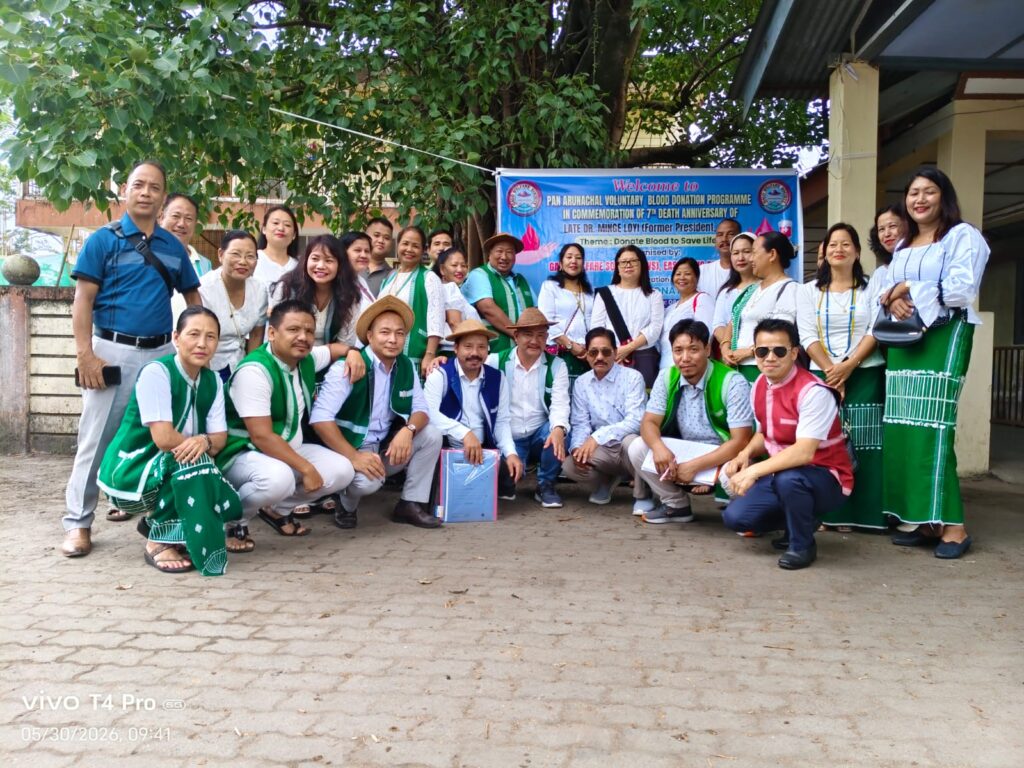
PASIGHAT : A Pan Arunachal Voluntary Blood Donation Programme was organised at Bakin Pertin General Hospital (BPGH), Pasighat, on Saturday, with 25 units of blood collected to strengthen the hospital’s blood bank. The programme was held in memory of late Dr Minge Loyi, former president of Galo Welfare Society (GWS), on his seventh death anniversary, commemorating his lifelong commitment to public service. The blood donation drive was inaugurated by BPGH Medical Superintendent Dr B Apum, who lauded the initiative and encouraged more people to participate in voluntary blood donation campaigns. The donation process was conducted under the supervision of Blood Bank Officer Dr D Modi and his medical team. Organised by the Galo Ao Blood Donation Group, the programme was led by chairman Kengo Zirdo and vice-chairman Gebi Kambu, under the guidance of GWS East Siang District Unit president Er Minkar Doji, general secretary Jompa Kakki and women wing president Gumpi Angu Riba. The drive witnessed enthusiastic participation from members of the community, with 20 men and five women voluntarily donating blood. Organisers said the collected units would help meet emergency requirements and support patients in need of transfusions. The organisers expressed gratitude to all donors, medical personnel, volunteers and Border Roads Task Force (BRTF) personnel for their support in making the programme a success. They also appealed to the public to embrace voluntary blood donation, stating that a single donation can help save lives.

Latest News, Popular News, State News

Woman held with suspected ganja

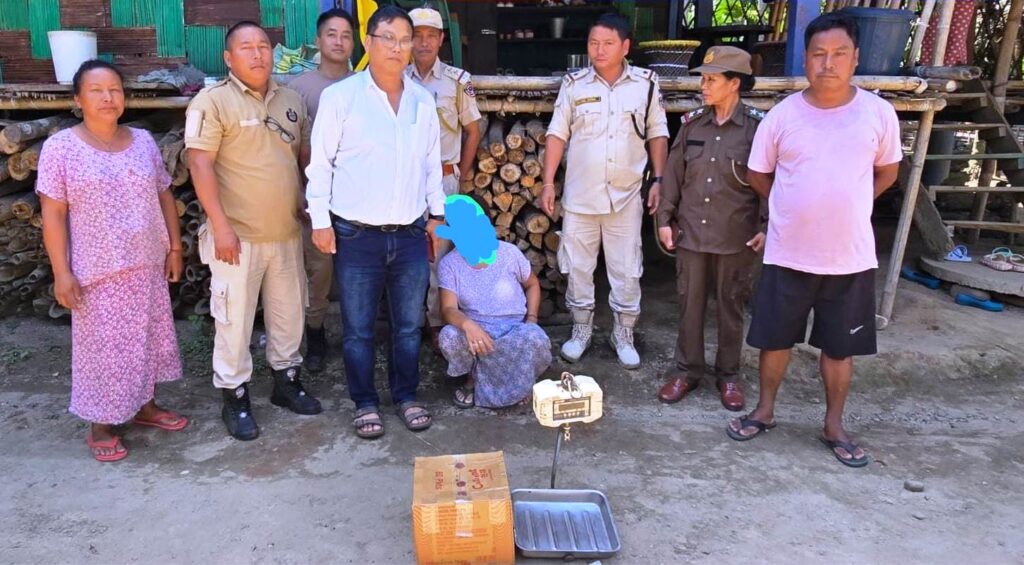
PASIGHAT : In a major anti-drug operation under Operation Dawn 2.0, East Siang Police arrested a woman and seized approximately 1.3 kilograms of suspected ganja during a search operation conducted at Oyan village under Sille-Oyan Police Station. Acting on credible information regarding the alleged sale of suspected ganja in the village, a police team was constituted on May 29 under the supervision of Additional Deputy Superintendent of Police Ayup Boko. The operation was led by Sille-Oyan Police Station Officer-in-Charge SI Yike Lomri and included SI A.R. Doley, LSI Kiryum Taipodia, ASI Tajing Tamuk, Head Constable Katin Mingki and Constable Amor Hemi. Accompanied by Sille-Oyan Circle Officer and Executive Magistrate Dubom Apang, the team conducted a search at the residence of Totong Pegu. During the operation, suspected ganja weighing about 1.3 kg, including packaging material, was recovered from the possession of Opera Pegu, wife of Totong Pegu. Police said the contraband was weighed, seized, packed and sealed in accordance with legal procedures. The entire operation was videographed to ensure transparency and compliance with due process. The accused was taken into custody and the seized substance handed over to the concerned police station for further legal action. Accordingly, a case, SOY/PS/C/No. 08/26, has been registered under Section 20(b)(ii)(B) of the Narcotic Drugs and Psychotropic Substances (NDPS) Act, and further investigation is underway. East Siang Superintendent of Police Pankaj Lamba commended the police team for the successful operation and reiterated the district police’s zero-tolerance policy towards drug-related offences. He also appealed to the public to remain vigilant and share information on illicit activities, stressing that community participation is crucial in the fight against drug abuse and trafficking.

REGIONAL

Manipur can only progress when all 36 communities of state develop together: CM Khemchand Singh

IMPHAL : Singh on Saturday said the state can progress only when all 36 communities living in the hills and valley develop together, stressing the need for inclusive and balanced growth. Speaking at a special interactive session with beneficiaries of the post-matric scholarship (ST) scheme organised by the department of tribal affairs and hills under Janjatiya Garima Utsav 2026 in Imphal, Singh said the scholarship programme aims to promote equality and uplift all communities. Expressing concern over reports that some students had not received scholarship payments for the past four months, the chief minister said the funds had already been released and that delays in certain cases were due to issues related to Aadhaar and bank account linkage. The CM said education plays a crucial role in shaping the future of young people and reiterated that the government remains committed to addressing genuine difficulties faced by students and ensuring that welfare schemes reach the intended beneficiaries. Singh also emphasised that Manipur can progress only when all 36 communities living in the hills and valley develop together and stressed the need for inclusive and balanced development across the state. Highlighting the importance of peace, Singh said development can take place only in a peaceful and conducive environment. He noted that students and daily wage earners are among those most affected during periods of unrest and emphasised that peace through dialogue is the only solution. He also appealed to students to contribute towards strengthening harmony and understanding among different communities. Speaking on the occasion via video conferencing, Deputy Chief Minister Nemcha Kipgen said the programme highlighted the importance of education in empowering tribal youth and shaping a better future. She also said the government of Manipur remains committed to supporting students in their educational journey. Students from Churachandpur and Kangpokpi districts also participated in the interaction via video conferencing and shared their concerns and challenges. (Source: PTI)  

REGIONAL

Strict monitoring to be undertaken for timely completion of highway projects: Nagaland MP

KOHIMA : Nagaland’s lone Lok Sabha MP, S Supongmeren Jamir, on Saturday said strict monitoring would be undertaken over the next four months to ensure the timely completion of national highway projects in the state, warning that contractors failing to meet deadlines would face action. Addressing a press conference at Congress Bhavan here, Jamir, also the Nagaland Pradesh Congress Committee (NPCC) president, said he inspected work on national highway stretches from Dimapur to Kohima, and Kohima to Jesami on May 28 and 29, to assess implementation, maintenance and safety standards of road projects executed by the National Highways and Infrastructure Development Corporation Limited (NHIDCL). He said that while Nagaland’s difficult terrain and unpredictable monsoon posed natural challenges, contractors and executing agencies must be adequately prepared to deliver projects on schedule. Jamir said the inspection, conducted along with district administrations, NHIDCL officials and contractors, focused particularly on road safety measures, drainage maintenance and construction quality. He pointed out that road safety infrastructure from the Assam border to Kohima, including signage and dividers, was found to be below NHIDCL standards. He said NHIDCL had been asked to strictly enforce its guidelines and ensure that contractors maintain the same standards as seen in other states. On maintenance issues, he said blocked drainage systems and neglect after road construction had contributed to road damage, and contractors had been directed to clear such areas within stipulated timelines. Referring to the Dimapur-Kohima stretch, Jamir expressed concern over poorly planned road dividers, saying some had been constructed without proper approval and adequate safety assessment, contributing to accidents. He said any road divider or access opening must be approved by competent NHIDCL authorities with proper signage. Jamir said that most highway stretches under NHIDCL are expected to be completed this year, except the Kohima bypass road, which may take another two years due to bridge construction requirements and land disputes. The MP raised concern over theft of aluminium crash barriers and road signage, terming it a serious threat to public safety. He also noted that illegal mining activities had blocked roads at over 35 locations. During his visit to Phek district on Friday, Jamir inspected the BSF Camp to Chakhabama stretch and said repair and maintenance works had been assured within 20 days. Jamir said weekly monitoring would be undertaken over the next four months in coordination with district administrations to ensure that contractors fulfil their commitments. (Source: PTI)    

REGIONAL

Tripura: CBI court sentences three executives of chit fund firm to 6 yr RI for duping 800 depositors

AGARTALA : A special CBI court in Tripura on Saturday sentenced three executives of a chit fund company to six years of rigorous imprisonment each for swindling Rs 5.5 crore from over 800 depositors, a lawyer said. The special CBI judge, Debasish Kar, also asked the Unakoti district magistrate to attach the properties of Pragatishil Infra Project Services Private Ltd to pay the duped depositors. The Pragatishil Infra Project Services Private Ltd, a chit fund company, started its operations in Tripura’s Unakoti district in 2009 and collected a huge amount from people, assuring “good returns” after maturity, the lawyer said. “However, the company stopped paying the depositors concerned even after maturity (in 2012). Angry depositors then lodged an FIR against the company at Kailashar police station. “After conducting a probe, the CBI submitted a charge sheet against three company executives — Arindam Das (CMD), Dwipsikha Das (Administrative Director) and Paritosh Das (MD) — in a court at Kailashahar, Unakoti district,” Special CBI public prosecutor, Prasenjit Saha, told reporters. He said that during the trial, the court found the three executives of the firm guilty of misappropriating Rs 5.5 crore from around 800 depositors. “The special CBI court in Agartala today pronounced the verdict, sentencing the three company executives to six years of rigorous imprisonment each under the Tripura Protection of Interests of Depositors (in Financial Establishments) Act, 2000,” he said. Saha said the court has also asked the Unakoti district magistrate to attach the chit fund company’s properties and return the money to the duped depositors. (Source: PTI)    

National, REGIONAL

Kuki groups seek separate administration, probe into violence in Manipur

NEW DELHI : Kuki organisations on Saturday demanded a separate administration for the Kuki-Zo people and impartial investigations into the recent clashes in Manipur, asserting that the community has faced decades of displacement, violence and constitutional marginalisation. In a statement issued at a press conference in Delhi, the Kuki Students’ Organisation (KSO) Delhi and NCR and other Kuki representatives said the demands were part of a broader call for justice, security and a political solution to the ongoing crisis in the northeastern state. The groups called for enforcement of Article 371C and restoration of the constitutional role of the Hill Areas Committee, alleging that administrative powers over hill villages had been transferred to valley-based authorities in violation of constitutional safeguards. They claimed that 462 hill villages had been brought under valley-based revenue jurisdiction, 192 hill villages placed under valley police stations and valley sub-registrar offices exercised jurisdiction over hill lands. The groups also renewed their demand for a formal inquiry into the 1992-93 violence involving the NSCN-IM, alleging that more than 1,000 Kuki civilians were killed and over 360 villages destroyed during the period. “There has never been a full accounting,” the statement said, demanding rehabilitation and justice for affected families. Referring to the ethnic violence that erupted in Manipur in May 2023, the Kuki representatives alleged large-scale destruction and displacement of the community. They claimed that thousands of homes and over 200 churches and places of worship had been damaged or destroyed and more than 41,000 people displaced. The KSO Delhi and NCR also expressed concern over the continued detention of 14 Kuki-Zo individuals allegedly held by Manipur Naga groups in Senapati district and demanded their “safe, immediate and unconditional release”. The organisation urged the Government of India and central security agencies to intervene decisively and initiate criminal proceedings against those responsible for the alleged abductions. The Kuki groups strongly condemned the killing of three Thadou-Kuki church leaders on May 13, alleging that the attack was carried out by the ZUF (Kamson faction), which they described as a proxy of the NSCN-IM. The KSO said no arrests had been made despite public outrage and demanded a fair and time-bound investigation by central agencies. The organisations further alleged renewed violence in parts of Ukhrul and Kamjong districts this year, including attacks on villages, killings and displacement. Calling for a long-term political settlement, the KSO urged the Centre to expedite dialogue with Suspension of Operations (SoO) groups representing the Kuki-Zo people and work towards what it described as an “honourable, constitutional and lasting political solution”. The groups maintained that the Kuki-Zo people were not seeking “sympathy or special favour” but justice, constitutional protection and security. “We are demanding justice, equal protection under the Constitution, security and the fundamental right to live with dignity and peace,” the KSO said in its statement. (Source: PTI)      

Editorial

A pause for ecological balance

In the Central government’s decision not to permit new hydro-electricity projects in the upper reaches of the river Ganga, there is a welcome recognition of ecological realities in the Himalayas. Three central ministries – handling environment, water, and power – told the Supreme Court, in an affidavit, that the government was not in favour of sanctioning new projects on the Alaknanda and Bhagirathi rivers in Uttarakhand. They cited the region’s ecological vulnerabilities, disaster risks, and religious significance as reasons that prompted the decision. However, the government proposes to complete the seven ongoing projects in the region. So far, it has backed multiple infrastructure projects while ignoring credible ecological concerns. Some of them, including the Char Dham project, have run into opposition over their adverse impact on the terrain. Infrastructure projects in the region have been defended on the grounds of national security requirements, promotion of pilgrimage and tourism, power production, and flood control. Now, after multiple disasters, the government appears to have partially acknowledged the urgency in securing the region’s ecological balance. In 2013, the Kedarnath floods showed the world the pent-up, destructive force of Himalayan nature. Since then, the region has experienced multiple landslides, cloudbursts, and subsidence in both urban and rural areas, and on highways. Glacial retreats, caused mainly by climate change but also aggravated by human intervention in nature, have led to major disasters and altered the topography of many areas along the Himalayan stretch. In 2023, a glacial lake outburst flood (GLOF) in north Sikkim washed away a hydroelectric project on the river Teesta. Apprehensions regarding hydropower projects underway on the Ganga basin have been placed before the Supreme Court since the 2013 flash floods. The government’s affidavit was in response to a Court directive seeking a status report of the projects. The principle behind the Central government’s change in stance should apply to other projects under construction or consideration in the Himalayan states. The projects being planned in the eastern Himalayan region on the rivers Teesta, Siang, and Dibang have attracted criticism. India has proposed a mega hydroelectricity transmission plan centred on the strategically critical Brahmaputra. Geologists and environmentalists have repeatedly expressed concern not only over the massive construction activity but also over the expansion of human settlements. Notably, this is a region that lacks a comprehensive ecological plan. It should be prioritised, ensuring that its framework covers all construction activity, both in the fragile ranges and the lower regions. (Source: DH)    

Latest News, Popular News, State News

Arunachal to set up four panels on ST status, ILP and infiltration

ITANAGAR : Chief Minister Pema Khandu on Friday said the state government has decided to constitute four high-powered committees to re-verify APST certificates, examine the non-APST offspring issue, strengthen the ILP framework and check infiltration. The decision was taken after discussions with the Arunachal Indigenous Tribes Forum (AITF), community-based organisations (CBOs), the All Arunachal Pradesh Students’ Union (AAPSU), the ST Bachao Andolan Committee, government officials and legal experts on the four key demands raised by the ST Bachao Andolan, Khandu said after the meeting. “Formation of four high-powered committees has been agreed upon today,” the chief minister said in a post on X. He added that the panels would examine the issues and recommend suitable measures. The CM further informed that official notifications constituting the committees would be issued by Monday. The decision follows a series of consultations between the state government and various stakeholders, including an eight-hour-long meeting chaired by Khandu on May 27 and another consultative session held at the civil secretariat here on Friday. Khandu said each committee would be led by a cabinet minister and include representatives from AITF, AAPSU, the ST Bachao Andolan Committee, legal experts, research scholars and women representatives to ensure a balanced, inclusive and action-oriented process. The four committees will separately re-verify the Arunachal Pradesh Scheduled Tribe (APST) certificates, issues concerning non-APST offspring, strengthening of the Inner Line Permit (ILP) framework, including a review of the ILP Guidelines 2026, and concerns relating to infiltration. During the meeting, stakeholders and government representatives agreed to continue the dialogue process, with another round of discussions scheduled for Monday. The committees have been given an initial timeframe of six months to submit their recommendations, though the period may be extended depending on the outcome of field studies and stakeholder consultations, officials said. To ensure regular monitoring of the exercise, three review meetings will be held under the chairmanship of the chief minister during the course of the committees’ work. The move comes amid sustained demands from indigenous groups for stronger implementation of the ILP regime and resolution of long-pending concerns related to tribal identity, demographic changes and the status of different communities in the state. (Source: PTI)