

ONLINE AGE

(Online version of the Arunachal Age newspaper)

Author name: OnlineAge

Latest News, National, Popular News, State News

PM pollution increased by 20 pc in Indo-Gangetic Plain, Himalayan region, North-East: Study

NEW DELHI : The overall particulate matter pollution in the Indo-Gangetic Plain, the Himalayan region, and North-East India increased by more than 20 per cent during the 2010-2019 period compared to the 2000-2009 baseline, according to a new study. It also revealed that in the eastern Indo-Gangetic Plain, carbonaceous aerosols, particles from the burning of crop residue, wood, and other organic material, showed strong and increasing trends between 2000 and 2024 (the period the study analysed). According to the study, the sharp rise in particulate matter (PM) in North-East India is attributed to intensified slash-and-burn agricultural practices and extensive use of biomass for domestic energy in rural households during this period. The study, “Decadal shifts in aerosol hotspots and source attribution over IGP, north-east India and Himalayas: A 25-year (2000-2024) study”, was published in the journal Atmospheric Environment and released on Monday. In a statement, Abhijit Chatterjee, co-author of the study and professor at the Bose Institute in Kolkata, said, “The eastern Indo-Gangetic Plain, and increasingly North-East India, are carrying a disproportionate pollution burden and it is being driven almost entirely by biomass burning. That is the signal that stands out most clearly across 25 years of data.” The analysis also found that IGP emissions are reaching the Himalayas. While pollution from Punjab and Delhi affects the western ranges, emissions from Bihar and West Bengal influence the eastern Himalayas. Soumen Raul, a senior research fellow at the Bose Institute, in a statement, said, “Our trajectory analysis shows that what is emitted in Punjab or Bihar does not stay there. It travels into the mountains. These are ecologically and climatically sensitive zones, and they are currently outside the scope of any structured clean air intervention in India.” (Source: PTI)      
Latest News, National, Popular News, State News

SC raps NTA over repeated NEET controversies, issues notice

NEW DELHI :  The Supreme Court on Monday said it was sad that NTA has not learn lessons from the earlier NEET paper leak as it sought response from the Centre, NTA and CBI on pleas for replacement of the testing agency with a robust and autonomous body to conduct the medical entrance exam. A bench of Justices PS Narasimha and Alok Aradhe directed that copy of petitions be served to Solicitor General Tushar Mehta besides other parties and asked the National Testing Agency (NTA), which is responsible for conducting the NEET exam, to file an affidavit by Thursday on compliance of directions issued by the court in 2024. “It’s sad that they have not learnt their lessons. The matter travelled to this court earlier also. There was a committee, a monitoring committee which made some recommendations and they were accepted. We want NTA to file an affidavit on the steps taken for compliance of recommendations suggested by the committee,” the bench said. The top court, which issued notice on a plea filed by the Federation of All India Medical Association (FAIMA), through lawyer Tanvi Dubey said it is tagging all the similar matters together. It directed the Centre-appointed committee led by former Indian Space Research Organisation (ISRO) chief K Radhakrishnan for overhaul of the functioning of the NTA to detail the steps taken for compliance of its directions. The medical body has urged the top court for direct restructuring or replacement of NTA with a robust and autonomous system to conduct NEET-UG, citing a “direct assault” on the fundamental rights of over 22.7 lakh students through recurring paper leaks. It has also sought a direction to appoint a high-powered monitoring committee until a fresh body is formally constituted to oversee the re-examination. It further said the committee should comprise a retired Supreme Court judge as the chair, along with a cybersecurity expert and a forensic scientist, to ensure that no further leaks occur. The undergraduate-level National Eligibility cum Entrance Test (NEET) held on May 3 by the NTA for admissions to medical education programmes was cancelled on May 12 amid allegations of paper leak, which are now being probed by the CBI. (Source: PTI)          

REGIONAL

UCC Bill introduced in Assam Assembly; seeks to ban polygamy, register live-in relationships

GUWAHATI : The Assam government on Monday tabled a Bill on the Uniform Civil Code, seeking to ban polygamy and make registration of live-in relationships compulsory. Parliamentary Affairs Minister Atul Bora tabled ‘The Uniform Civil Code, Assam, 2026 Bill’ in the assembly on behalf of Chief Minister Himanta Biswa Sarma. The opposition parties, including Congress, Raijor Dal and Trinamool Congress, opposed the move and demanded wider consultation with all the stakeholders before its introduction. “The Bill aims to consolidate and simplify laws governing marriage, divorce, succession, and live-in relationships,” Sarma said in the ‘Statement of Object and Reasons’ in the Bill. For marriage, the Bill sets 21 years and 18 years as minimum ages for men and women respectively, and prohibits polygamy, he added. “For the first time, Bill provides a legal framework for live-in relationships. By requiring registration, the law ensures that the rights of partners — and any children born from such unions — are formally recognised and protected,” the CM said in the Bill. The Bill, however, said that it will not be applicable to any of the Scheduled Tribes residing in Assam. (Source: PTI)    

REGIONAL

Bhutan PM arrives in Assam, to meet governor

GUWAHATI : Bhutan Prime Minister Dasho Tshering Tobgay arrived in Assam on Monday and is expected to meet the governor later in the day. State Cabinet minister Atul Bora received the Bhutan prime minister at the state guest house here and later said that he expected the visit would open new avenues of goodwill, cooperation and cultural exchange between Assam and Bhutan. “I had the honour of according a warm and heartfelt welcome to Hon’ble Prime Minister of Bhutan, His Excellency Dasho Tshering Tobgay, at State Guest House Number One, Koinadhora, Guwahati,” Bora said in a post on X. He said that under Chief Minister Himanta Biswa Sarma, Assam continues to strengthen its historic ties and friendly relations with neighbouring Bhutan in the spirit of regional cooperation, mutual respect and shared prosperity. “Assam and Bhutan share an age-old relationship rooted in mutual trust, harmony and deep socio-cultural ties. Our enduring friendship has been strengthened over generations through close people-to-people connections, shared traditions and longstanding cooperation across diverse sectors,” Bora said. “I firmly believe that the visit of the prime minister of Bhutan to Assam will further deepen the special bond between Assam and Bhutan, while opening new avenues of goodwill, cooperation and cultural exchange for the greater benefit of our people,” the minister added. Assam police chief Harmeet Singh, General Administration Department secretary Narsing Pawar and other senior officials of the state government also accompanied Bora in receiving the Bhutan prime minister. A Lok Bhavan spokesperson said the visiting dignitary is scheduled to call on Governor Lakshman Prasad Acharya later on Monday. A detailed itinerary of Tobgay’s visit has not been shared yet. (Source: PTI)    

REGIONAL

CAG expresses concern over Assam”s fiscal sustainability as debt rises, investment remains limited

GUWAHATI : The Comptroller and Auditor General (CAG) on Monday raised concern over the fiscal sustainability of the Assam government in its report for the 2024-25 fiscal, pointing at the increasing debt load, high committed expenditure and limited capital investment in the state. In the report on state finances for 2024-25 tabled in the Assembly, the CAG also said that the delay in submission of utilisation certificates, pending accounts of departmental undertakings and autonomous bodies, is affecting financial reporting. It said the state’s economy showed moderate growth during the 2024-25 fiscal year, with Gross State Domestic Product registering a growth of 13.07 per cent as against the 2023-24 financial year. The state contributed 1.95 per cent to the country’s GDP, with the figure on an increasing trend over the past five years. During 2024-25, the state’s revenue receipts grew by 5.87 per cent, driven primarily by growth in the state’s share in union taxes and duties, higher tax collections, notably under SGST. However, non-tax revenue of the state declined by 9.34 per cent, and grants from the Centre also decreased during the period, the CAG report said. The state’s expenditure was dominated by a moderate growth of revenue spending (6.10 per cent). The CAG report said that during the previous five years, despite increasing pressure from committed expenditure, the state was able to maintain a consistent level of fiscal flexibility, though with limited scope for expansion in discretionary and developmental expenditures. Capital expenditure during the previous five years remained “volatile and below budgeted levels (except for 2021-22), reflecting constraints in infrastructure investment”, the report said. Subsidies during 2024-25 increased sharply (124.63 per cent), mainly due to power subsidies, the CAG noted. “As a result, the state was not able to arrest the revenue and fiscal deficits within the target levels of the State FRBM Act, thereby rendering little room for fiscal consolidation,” the report said. “Though outstanding liabilities remained within the numerical targets, this needs to be seen in the context of growing outstanding off-budget borrowings and contingent liabilities through guarantees,” it added. The increasing debt load, high committed expenditure and limited capital investment raise concerns about fiscal sustainability, the report said, stressing revenue augmentation, better expenditure control and structural reforms to ensure long-term fiscal health. The CAG said transparency should be enhanced in off-budget borrowings, ensuring timely accounting and reports, and steps should be taken for more judicious budget provisioning. (Source: PTI)        

REGIONAL

Manipur govt committed to strengthening police force to maintain peace: CM

IMPHAL : Manipur Chief Minister Y Khemchand Singh on Monday said his government is committed to strengthening the police force to maintain peace in the state that has witnessed ethic violence for about three years, and urged people to refrain from violent agitations. Speaking at an event on the occasion of flagging off 477 new vehicles for the state police, he asserted that it would be difficult to bring peace to Manipur without a strong police force. Singh said, “Manipur Police personnel took a big responsibility in controlling and preventing the violence in the state and even sacrificed their lives. Army, Assam Rifles, CRPF, BSF and all other security agencies also took equal responsibility in maintaining the law and order situation following the unfortunate violence in the state.” More than 260 people have been killed and thousands rendered homeless in ethnic violence between Meiteis and Kuki-Zo groups since May 2023. The government is committed to providing “maximum support to strengthen the police force”, the CM said. “During an agitation following the killing of two children in a bomb attack at Tronglaobi in Bishnupur district, there had been instances when certain youths had targeted security forces, instead of pursuing peaceful rallies and engaging in talks. I appeal to all not to engage in violent activities,” the chief minister said. Later in a post on X, Singh said, “Flagged off 477 police vehicles at the 1st MR Parade Ground today in the presence of Home Minister K Govindas Singh, MLAs, Commissioner (Home) DGP, and senior police officials.” The vehicles procured for the Manipur Police are part of a scheme for the modernisation of police, he said. “Today is a historic moment for the state….This significant augmentation of police mobility and operational capacity will strengthen law enforcement and enhance public service delivery across the state,” he said. “The Government of Manipur remains firmly committed to equipping the police force with modern resources and infrastructure to ensure effective policing, public safety, and the maintenance of law and order,” he added. (Source: PTI)          

Editorial

Xi-Putin meet: A new axis in the making?

There is a certain theatre to summitry, and Beijing staged it masterfully. First, Donald Trump arrived, then Vladimir Putin – each travelling thousands of miles to sit across from Xi Jinping in Beijing, now at the centre of geopolitics. The optics were unmistakable: China is now the world’s indispensable interlocutor, and Xi its undisputed convener-in-chief. The agenda of the Xi-Putin summit, held on Wednesday, was broad in scope and strategic in intent. The two leaders signed documents spanning trade, technology, scientific research and intellectual property, while extending their foundational treaty of “good neighbourliness and friendly cooperation” – first inked a quarter of a century ago. They spoke warmly of cooperation in artificial intelligence and even the conservation of rare tigers and pandas. But beneath the ceremonial warmth lay substance that matters greatly for the rest of the world. “The global agenda of peace and development is facing new risks and challenges, with the danger of fragmentation of the international community,” the Xi-Putin joint declaration stated in clear terms. The centrepiece of their joint statement was a pointed condemnation of United States. Both leaders warned of a world drifting back towards the “law of the jungle” — a deliberate rebuke of American foreign policy, directed squarely at the Trump administration’s unilateralism, its pursuit of a “golden dome” missile defence system, and its decision to allow a nuclear arms treaty to lapse in February. Whatever the diplomatic niceties, this amounted to a declaration of an alternative world order — one centred on Beijing. Yet the summit also revealed limits. Russia and China failed to finalise a long-anticipated gas pipeline agreement that would have doubled Moscow’s fossil fuel exports eastward. Pricing disagreements reportedly blocked a deal – a reminder that even the warmest partnerships have hard commercial edges. Currently, China sits at the forefront of global geopolitics. It can pick and choose partners and dictate the terms of engagement. Putin needs China far more than China needs Russia, and Beijing knows how to use that leverage quietly. However, it is unmistakable that the two powers are drawing closer, and the synergy is evident. First, the Russia-China axis has deepened beyond rhetoric: from military exercises to — according to European intelligence agencies — covert training of Russian soldiers, Beijing’s “official neutrality” on Ukraine is increasingly difficult to sustain as credible. Second, Xi’s carefully choreographed reception of both Trump and Putin in the same week underlines China’s rare position as a power that neither the United States nor Russia can afford to alienate. Third, and perhaps most consequentially, the joint warning against American “unilateral bullying” signals that Beijing and Moscow intend to shape the architecture of whatever post-American international order may be emerging together. Whether the world should find that prospect stabilising or alarming is, perhaps, the defining geopolitical question of our era. (Source: The Pioneer)  

Latest News, National, Popular News, State News

Tribal groups seek removal of converted Muslims, Christians from ST list at Delhi conclave

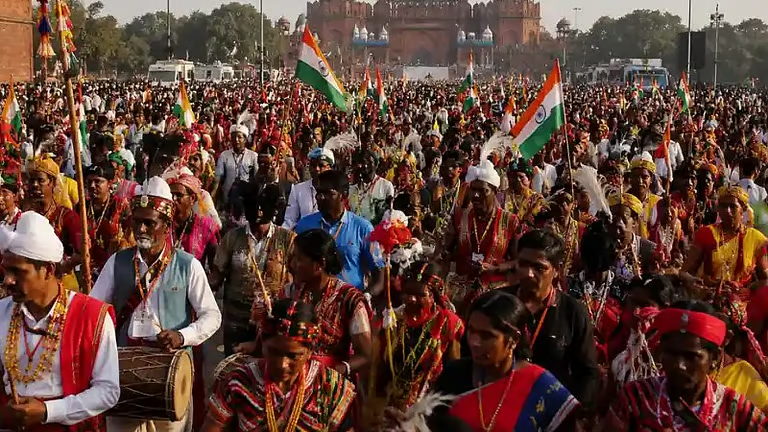
  NEW DELHI : Lakhs of members from various tribal communities from across the nation gathered at Delhi’s Red Fort grounds on Sunday and called for the de-listing of converted tribals from the Scheduled Tribe category. The ‘Janajati Sanskritik Samagam’, organised by the RSS affiliate Janajati Suraksha Manch and allied groups, was held in the backdrop of the 150th birth anniversary year of tribal icon Birsa Munda at Red Fort grounds. “This cultural programme is aimed at giving a major push to our long-pending demand for de-listing converted tribals from the Scheduled Tribe category. This issue goes back to the time of tribal leader Kartik Oraon ji, who raised it before the then prime minister Indira Gandhi in the late 1960s,” Maalaya Jigdung of the Janjati Suraksha Manch, Assam prant, said. Jigdung asserted that the mobilisation will help build wider national support for a constitutional amendment under Article 342. Organisers claimed that nearly 1.5 lakh people from over 500 tribal communities across the country participated in the event. “This has been one of our oldest demands and the core objective behind the formation of the Janjati Suraksha Manch. Through this programme, we have showcased tribal cultural identity while also strengthening our movement for de-listing,” Jigdung told PTI. The event began with cultural processions from five locations in the national capital — Rajghat Chowk, Ramlila Maidan, Ajmeri Gate Chowk, Qudsia Bagh near Kashmiri Gate and Shyamgiri Temple near Shastri Park Bus Depot. The rallies, covering around 2.5 to 3.5 kilometres, converged at the Red Fort grounds. Participants dressed in traditional attire carried tribal flags, beat drums and performed folk dances as they marched through Delhi’s streets. Groups from Assam, Tripura, Bihar, Jharkhand, Odisha, Andaman and Nicobar and several other states took part in the event, which organisers described as the “largest tribal cultural mobilisation of its kind”. Kartik Oraon, a prominent tribal leader from Bihar and former Congress MP, had submitted memoranda signed by hundreds of MPs in 1967 and 1970 seeking the removal of Scheduled Tribe benefits for tribals who had converted to Christianity or Islam. Balaram Phangcho, organising secretary of the North East Janajati Dharm Sanskriti Suraksha Manch from Assam’s Karbi Anglong district, said around 2,000 to 2,500 people had travelled from his district alone. “This kind of programme is being organised for the first time. We have to protect the very existence of tribal communities. Those who have converted, especially to Islam or Christianity, should be removed from the Scheduled Tribe category. De-listing should be done through an amendment under Article 342,” he said. Phangcho mentioned that people had travelled from remote villages because they believed the issue is linked to the survival of tribal identity and traditions. Stressing the link between identity and culture, he said, “My identity is my culture — if my culture does not survive, neither will I.” Shanti Bikas Chakma from Tripura said the gathering will help protect tribal religion, culture and traditions. “This is the first time we are seeing such a programme organised at this scale. People from so many tribal communities have come together with one message,” Chakma said. Chakma also thanked the Delhi government and volunteers for arrangements related to accommodation, food and transport for participants arriving in special trains and buses from different states. Janajati Suraksha Manch was formed in 2006 to campaign for the removal of ST benefits for tribals who had converted to other religions. (Source: PTI)

Latest News, Popular News, State News

DC inspects ILP facilitation centre

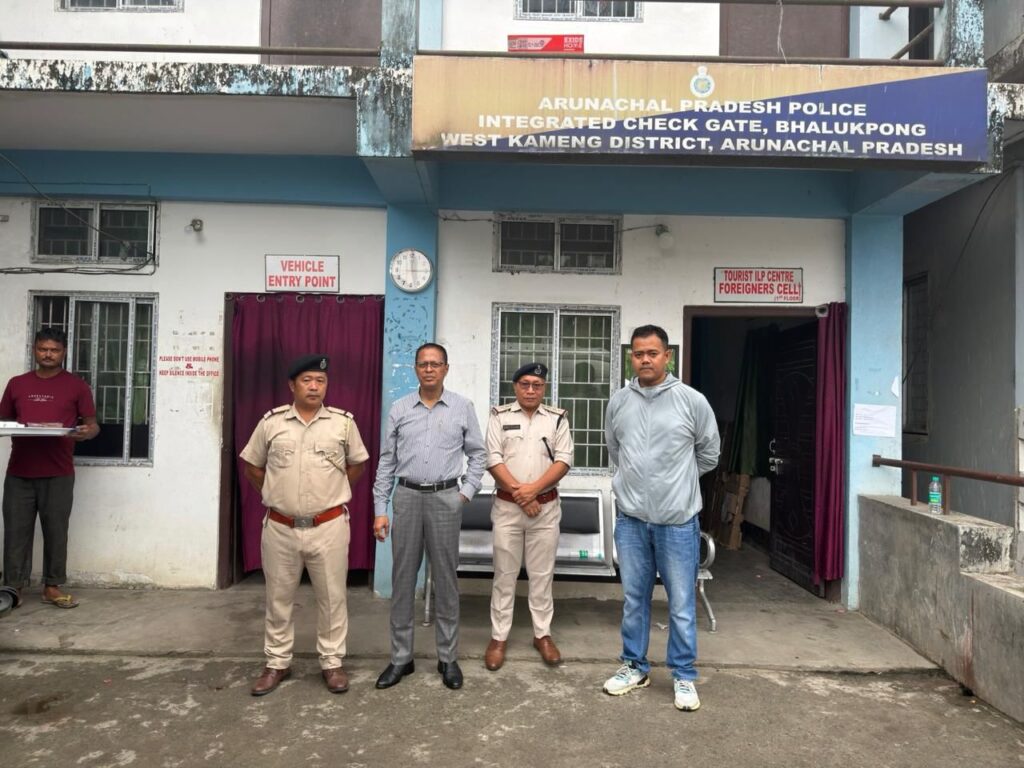
  BHALUKPONG : West Kameng Deputy Commissioner Dr Dilip Kumar inspected the Inner Line Permit (ILP) Facilitation Centre and the police check gate at Bhalukpong on Sunday, accompanied by Assistant Commissioner Arvind Pangging and the officer-in-charge of Bhalukpong Police Station. During the inspection, the deputy commissioner reviewed issues related to acute parking congestion near the check gate and the poor condition of the ILP Facilitation Centre. Dr Kumar directed the local administration and police authorities to ensure proper traffic regulation and effective parking management for the smooth movement of vehicles and visitors in the area. Emphasising strict vigilance, he instructed officials concerned to strengthen scrutiny and verification of ILPs to prevent illegal entry into Arunachal Pradesh through fake or fraudulent permits. The deputy commissioner also stressed the need for close coordination between the Tourist Facilitation Unit and the ILP Facilitation Centre to improve public service delivery and ensure efficient management of visitors entering the state. Assuring all possible support from the district administration for strengthening the facilitation centre, Dr Kumar urged officials and staff to remain sincere, courteous and proactive while assisting visitors seeking ILPs. He also directed them to strictly adhere to government guidelines relating to issuance and verification of permits. (DIPR)

Latest News, Popular News, State News

NCC CATC-19 concludes at Tawang

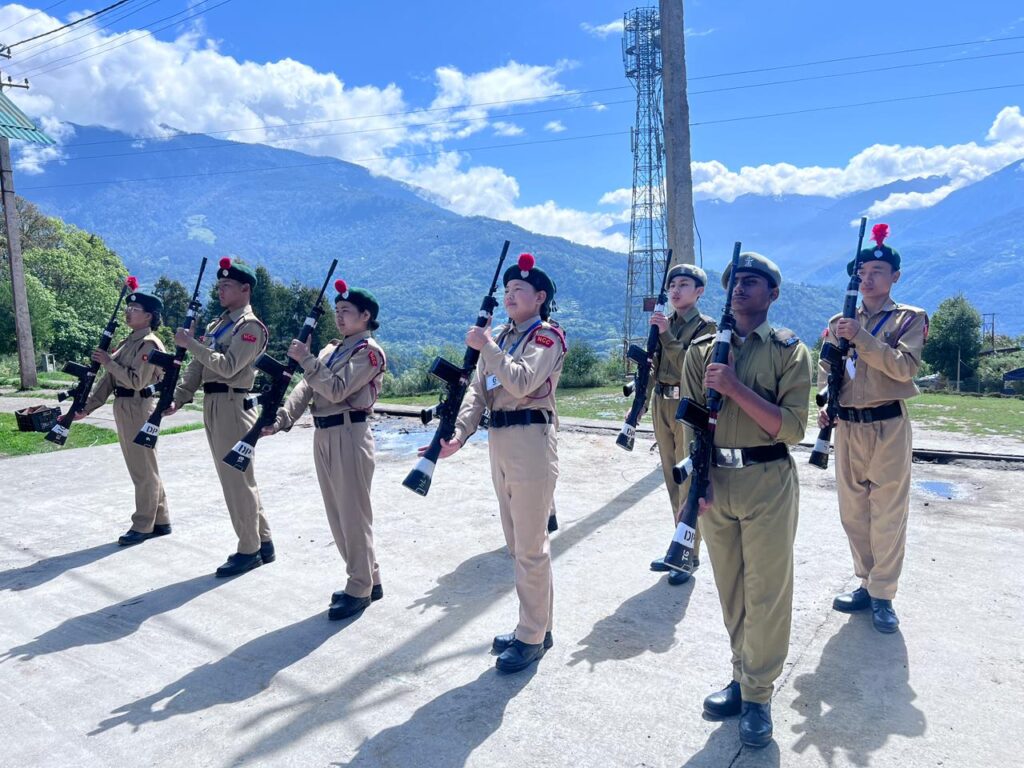
  TAWANG : The 2 Arunachal Pradesh Battalion of the National Cadet Corps (NCC), Tawang, conducted the Combined Annual Training Camp (CATC)-19 at Jawahar Navodaya Vidyalaya, Tawang, from May 14 to 23. A total of 164 NCC cadets from Tawang and West Kameng districts participated in the ten-day camp aimed at promoting discipline, leadership, teamwork and overall personality development among youths. The camp featured a series of informative and motivational sessions on biodiversity conservation, gender sensitivity, benefits of joining the NCC and career opportunities in the Indian Army. As part of the programme, the Yuva Aapda Mitra Scheme training was also conducted by the State Disaster Response Force (SDRF), with participation from 95 senior division and senior wing cadets. During the training, cadets were imparted practical knowledge on disaster response and basic life support techniques, including cardiopulmonary resuscitation (CPR), bleeding control, splinting, search and rescue operations, rappelling and first aid procedures. A weapon display was also organised during the camp to provide cadets firsthand exposure to various weapons and military equipment. Several competitions and activities, including drill contests, drawing competitions, group discussions and cultural programmes, were conducted to encourage confidence, creativity and team spirit among the participants. The camp concluded successfully with active participation from cadets and staff, reflecting the NCC’s continued commitment towards youth development and nation-building initiatives. (DIPR)